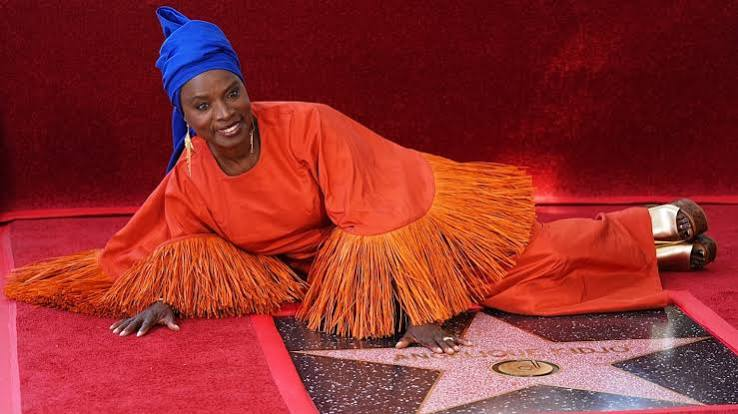

For more than four decades, Angélique Kidjo has built the kind of career that once offered African artists one of the few reliable routes to global recognition: leave home, enter international music circuits, earn the attention of established institutions and keep going long enough for those institutions to eventually acknowledge you. On August 18, the Beninese singer became the first African musician and first Black African to receive a star on the Hollywood Walk of Fame, joining the 2,854 names honoured on the landmark.
The significance of the moment is difficult to separate from the length of Kidjo’s career. She has released 18 albums, won five Grammys and spent decades moving between African traditions and sounds from the Americas, Europe and the wider diaspora. Her international career began long before TikTok could turn a song into a global hit overnight, and long before an African artist could measure their reach through Spotify or YouTube views.
That makes her Hollywood star more than another award. It represents a system of recognition that African artists once had to work their way into. Kidjo did not simply become famous in Benin and wake up one morning with a global audience. Her career took her through international labels, touring circuits, collaborations and institutions that could give an African artist credibility in markets where African music was often treated as a niche category.
The landscape facing African talent today looks very different. An artist no longer needs to wait for a Western gatekeeper to decide that an audience is large enough to matter. Burna Boy can release a record to millions of listeners across continents without first convincing an American executive that Nigerian music belongs in the room. A creator can build an audience on YouTube from Lagos, accumulate millions of views and negotiate directly with brands. The route to international attention has become shorter, even if it has not necessarily become easier.
Kidjo herself has become part of that transition. Her latest album, HOPE!!, features younger African and international artists including Ayra Starr and Davido, alongside Pharrell Williams, Quavo and Nile Rodgers. The collaborations show that the career she built through the older system now overlaps with a generation that grew up inside a much more connected global music industry.
So does a Hollywood Walk of Fame star still matter to this newer generation?
It does, although perhaps not in the way it once did. A star on Hollywood Boulevard cannot give a Nigerian TikTok creator an audience or make an Afrobeats song go viral. It does not replace streaming numbers, social-media communities or the ability to turn attention into income. What it provides is something digital platforms cannot quite manufacture: institutional memory.
That matters because internet popularity moves quickly. A creator can dominate a platform for a year and disappear from the conversation the next. A song can collect hundreds of millions of streams without guaranteeing that the artist will still be discussed a decade later. The Walk of Fame operates on a different clock. It takes a career and places it inside a physical, permanent cultural landmark.
For African creators, that distinction may become increasingly important as the continent produces more talent that can build audiences independently. The question may no longer be whether they need Western institutions to validate them. They clearly do not. The more useful question is what happens when digital success eventually needs to become something that outlives an algorithm.
For the artists and creators coming after her, that may be the more important part of this moment. They have more ways to become visible than Kidjo ever did. What they do with that visibility will determine whether today’s viral success becomes tomorrow’s legacy.
Kidjo spent four decades building a career before Hollywood put her name on its pavement. The creators coming after her may not need to wait that long to be seen. But being seen has never been the same thing as being remembered.