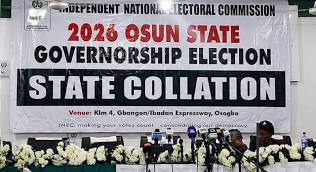


For Nigerians who have grown used to hearing that their votes do not matter, Osun 2026 offers an uncomfortable question: what if they do? Ademola Adeleke has been returned as governor after defeating APC’s Bola Oyebamiji, winning 19 of the state’s 30 local government areas and polling 511,067 votes against Oyebamiji’s 445,815. On the surface, it looks like the kind of election that should encourage people who have become convinced that political outcomes are decided long before they reach the polling unit.
But there is a problem with turning Osun into a neat story about voter power. The turnout was meaningful, but it was not a dramatic break from the state’s recent electoral history. Osun recorded a 42.16 per cent turnout in the 2022 governorship election, when Adeleke also won. So perhaps the lesson is not that Nigerians suddenly returned to voting. It may be that, in a state where elections are already closely watched, enough voters still believe the result is worth showing up for.
That distinction matters because voter apathy has become one of the easiest explanations for Nigeria’s disappointing electoral participation. When people repeatedly see elections followed by the same political arrangements, it is understandable that some begin to ask what difference their individual ballot can make. Osun offers a more complicated answer. A vote can contribute to a victory, but only when enough people make the same decision and when the electoral process allows those decisions to become the result.
There is also something encouraging about the closeness of the contest. Adeleke did not simply sweep his opponent away; Oyebamiji still secured 445,815 votes and won 11 LGAs. That means hundreds of thousands of Osun voters wanted something different from what the eventual winner was offering. For the ordinary Nigerian, that may be more important than the identity of the winner. It suggests that an election can still contain genuine competition, rather than functioning as a ceremonial confirmation of whoever is already expected to win.
Yet Osun cannot be held up as proof that Nigeria’s electoral problems have disappeared. Vote-buying remains a serious concern, while reports of BVAS problems and other irregularities mean that the election cannot simply become a celebration of Nigerian democracy. The credibility of an election is not measured only by whether a popular candidate wins; it also depends on whether voters can make that choice freely and whether the technology and officials meant to protect that choice actually work.
This is why the most useful lesson from Osun may not be that Nigerians should suddenly believe in elections again. It may simply be that they should not give up on them either. One election cannot erase years of distrust, just as one successful election cannot prove that every future election will be credible. If anything, Osun should create a higher expectation: if voters turn up, the system should be capable of respecting what they have done.
And that is where the election becomes relevant beyond Osun. With 2027 approaching, political parties will spend the next year asking Nigerians for their votes, their attention, and eventually their trust. Osun gives ordinary Nigerians a reason to ask what their participation can produce. Maybe your vote can matter when enough people show up, and the process protects their choice.
But should one election be enough to restore that faith? Probably not. The real test is whether Osun becomes a pattern rather than an exception. If future elections allow voters to turn up, make their choices freely, and see those choices reflected in credible results, then perhaps Osun will have meant something bigger than one governor winning another term. It will have shown Nigerians that participation is not pointless. As one election can give people a reason to hope, only repeated elections can give them a reason to believe.