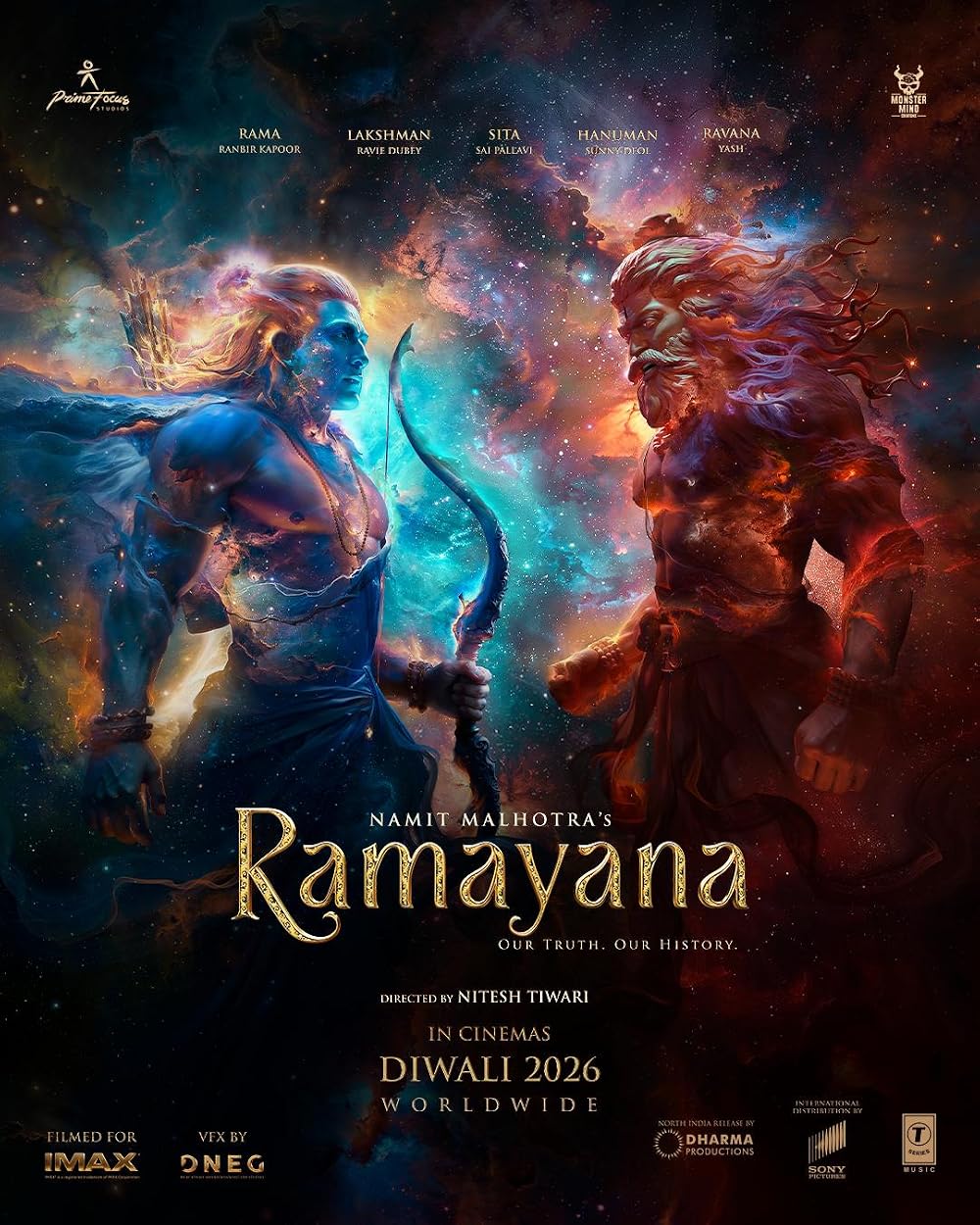


A yet-to-be-released Bollywood film, ‘Ramayana,’ is trending and has caught the attention of an international audience, and with the success Indian movies have seen on Netflix this year, we are wondering when Bollywood left Nollywood behind.
In the early 2000s, Bollywood was watched by nearly every household in Nigeria, and as streaming services like DSTV got popular, people moved to watching the shows and movies on ‘Zeeworld’; however, as Nollywood also continued to grow and gain momentum, Bollywood was left behind, and Nigerians began to focus on Nollywood films and series.
While Nollywood continued to grow and lose momentum in Nigeria, Bollywood gained a huge international audience and became a major player in the industry, once on equal footing with Nollywood and, in some cases, behind it. Using ‘Ramayana,’ we will look at Bollywood’s growth in the last few years, which has surpassed Nollywood.
How ‘Ramayana’ captured the attention of its audience even before its release
‘Ramayana’ is set to be one of India’s most expensive film projects. Set for release on the 5th of November, 2026, the film has a budget of over $400 million across its two parts.
The film’s trailer surpassed 350 million views internationally after its graphics caught many eyes. The elaborate nature of Bollywood trailers and film graphics has always worked in their favour, and ‘Ramayana’ is no different. Although Nollywood epic films carry the same extravagant flair in their movie posters, the major marketing rollout for ‘Ramayana’ shows it is in a different ballgame.
For Nollywood, an industry where very few filmmakers break through or see exciting revenue from their movies, Bollywood generates over $3.2 billion in annual revenue. When an industry is able to see growth in its joint industry revenue, there is more investment poured into the industry at large.
‘Ramayana’ is also aiming for a massive worldwide footprint, targeting tens of thousands of screens; by comparison, Nollywood films made by Nigerian filmmakers do not receive the same opportunities, even when a landmark 4,500-screen opening in the United States is secured via Warner Bros
When Did Bollywood Leave Nollywood Behind?
Factually, it is impossible to claim Nollywood left Bollywood behind, as Bollywood was an established industry before Nollywood existed. While both industries fought for the top position in the Nigerian market, Bollywood’s popularity and global audience have always put it ahead of Nollywood.
However, in the last few years, Nollywood has taken over its Nigerian audience, while Bollywood has become an even bigger international market, and here is how it did it.
- Film Output
Nollywood produces about 2,500 films annually, while Bollywood produces about 3,000, many of which reach global audiences and screen in international theatres. Very few Nollywood films break out of the market and reach international audiences, but for Bollywood, a breakout film is not rare, as it has the audience for it. Even with Nollywood’s efforts to grow a global audience, financial difficulties have dampened these efforts.
- Financial Differences
Nollywood is not a government-backed industry, as it is not seen as soft power. Unlike Afrobeats and Nigerian fashion, Nollywood is still relatively new and lacks a strong global market. Bollywood has a thriving film industry that attracts investment not only from filmmakers, but also from the country and other international markets, as it has proven itself a successful player in the global market.
- Marketing
One of Bollywood’s strengths is how it is marketed and how the industry has committed to following through on the image it has built in the global market. Most Bollywood films are viewed as elaborate, overly ambitious, and unrealistic, and though that may seem negative, their extravagance is a major factor in their popularity.
Nollywood also tries to appeal to an international audience, even with films that are uniquely Nigerian. Nollywood scripts are often written with Western elements in mind, while Bollywood appeals to audiences by showcasing unique Indian culture. Bollywood, while catching up to modern times, has still stayed true to its essence, and as Nollywood has evolved, it has become modernised, with rare instances of the original uniqueness it began with.
What do we think?
The comparison between the two industries gives Bollywood an unfair advantage, as it has existed longer than Nollywood has. However, Bollywood’s exponential growth should encourage Nollywood to make more films centred on Nigerian culture, without skimping on scriptwriting or trailers that could draw a large audience.
It also suggests that Nollywood could join Afrobeats and the Nigerian fashion industry in becoming a source of soft power for the country.