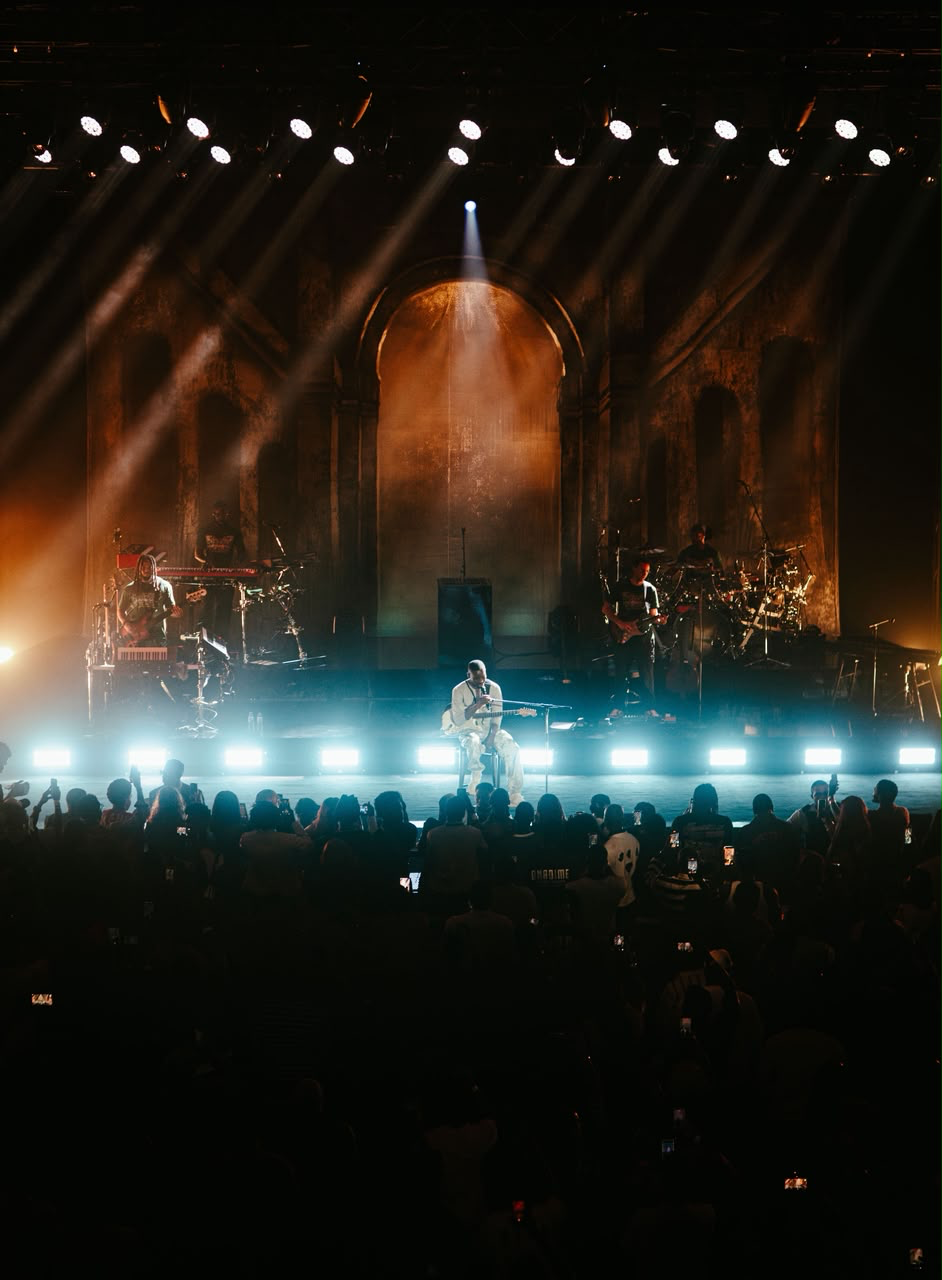

British rapper Dave’s two-day, sold-out performance at the National Theatre as the finale of his The Boy Who Played the Harp tour has raised conversations about the venue’s potential to host more major concerts. Positive reactions from concertgoers suggest that the venue was a welcome choice, which makes us ask this question: could it become a regular destination for major live music events in Nigeria?
Dave’s performance is part of a growing interest in the venue, as Adekunle Gold held a concert there in 2025, while Davido’s reported three-day residency has also drawn attention to the possibilities the space offers. Together, these events point to the potential for the Wole Soyinka Centre for Culture and Creative Arts, also known as the National Theatre, to play a bigger role in Nigeria’s live music scene.
But what does Dave’s concert tell us about the future of live music in Nigeria, and why should more artists consider the venue?
How Dave’s Concert Could Encourage More Shows in Nigeria
Dave’s two-day concert could encourage more international artists to consider Nigeria as a tour destination. It may also give promoters greater confidence in Lagos as a viable location for large-scale live music events. Beyond the success of a single performance, the concert highlights three important possibilities.
1. It showcases the potential of the venue’s infrastructure
A successful concert depends on more than the artist’s performance. The venue must also provide the facilities needed to deliver a good experience for both performers and audiences.
The renovated National Theatre offers a setting for concerts that require reliable air conditioning, high-quality sound, and modern stage lighting. These facilities can help meet the expectations of local and international touring artists while providing audiences with a suitable environment for large-scale indoor performances.
When venues deliver consistently, they can build confidence among artists, promoters, and concertgoers. Dave’s performance provides another opportunity to demonstrate what an upgraded cultural facility can offer Nigeria’s entertainment industry.
2. It signals the purchasing power of Nigerian fans
One concern surrounding Nigeria as a destination for international tours is whether enough fans will pay to attend major concerts. A sold-out, two-day performance by Dave offers an encouraging signal that there is an audience for large-scale, ticketed indoor events.
For promoters, this kind of response can help strengthen the case for bringing more international acts to the country. However, long-term confidence will depend on more than one successful concert. Consistent attendance, reliable event delivery, and sustainable ticket pricing will also matter.
If artists and promoters continue to see strong demand, they may become more willing to invest in additional shows in Lagos and other Nigerian cities.
3. It demonstrates demand for major live music events
Dave’s concert also adds to the evidence that Nigerian audiences are interested in well-produced live music experiences. Adekunle Gold’s successful performance at the venue in 2025, alongside Dave’s recent shows, suggests that the National Theatre could accommodate different artists and audiences.
A growing calendar of concerts could help establish the venue as a recognised destination for live performances, rather than a space used only for occasional events. That consistency would give audiences more opportunities to attend shows and help promoters plan future events with greater confidence.
Why Should More Concerts Be Held at the National Theatre?
The venue’s potential extends beyond hosting successful performances. More concerts at the Wole Soyinka Centre for Culture and Creative Arts could deliver wider infrastructural, economic, and cultural benefits, provided organisers maintain high standards and build a sustainable programme of events.
1. Infrastructural benefits
The renovation of the National Theatre highlights the value of investing in existing public infrastructure. Rather than leaving major cultural facilities underused, consistent programming can help keep them active, relevant, and useful to the public.
More concerts could also encourage greater investment in other venues and cultural spaces across Nigeria. If the National Theatre demonstrates that a renovated public facility can attract audiences and support major productions, it could strengthen the case for improving similar structures elsewhere.
Beyond renovation itself, effective maintenance and management will be essential. A venue can only sustain its appeal if organisers and operators consistently deliver the facilities and services that artists and audiences expect.
2. Economic benefits
When international artists such as Dave perform in Nigeria, the benefits can extend beyond the concert itself. Visitors may spend money on accommodation, transport, food, and other services, while local concertgoers also contribute to businesses around the event.
More international shows could therefore support economic activity, particularly when they attract visitors from outside the host city or country. The scale of that impact will depend on factors such as attendance, visitor spending, and the extent to which local businesses capture event-related activity.
A regular programme of concerts could also create opportunities for people working behind the scenes. Sound and audio engineers, lighting technicians, event organisers, security personnel, hospitality workers, and vendors all contribute to live productions. More consistent demand for events could help support work across these roles.
3. Cultural benefits
Live music gives artists and audiences a space to connect, while allowing a country’s creative industry to reach wider audiences. As more artists perform at the National Theatre, the venue could become an increasingly important part of Nigeria’s cultural identity.
With sustained investment, effective management, and a consistent calendar of high-quality events, the venue could build a stronger reputation as a destination for major concerts. It could eventually gain the kind of recognition associated with globally renowned performance venues, such as New York’s Madison Square Garden, while retaining its distinct Nigerian identity.
That kind of reputation would take time to establish. However, every well-executed event could help strengthen the venue’s profile and reinforce Nigeria’s position as a destination for live music.
What Does This Mean for Nigeria’s Concert Culture?
Dave’s decision to include Nigeria on his tour, along with growing interest in concerts at the National Theatre, highlights an opportunity for the country’s live music industry. These performances suggest that Nigeria can attract major shows, while a renovated venue can provide a setting in which artists and audiences come together.
The next step is to build on that momentum. Consistent event programming, reliable infrastructure, effective management, and careful planning can help turn individual successes into a sustainable concert culture.
The renovation of the National Theatre has helped renew interest in the venue. Now, regular, well-organised performances could help demonstrate its long-term value—not only as a space for entertainment, but also as an asset that can support Nigeria’s creative industry, create economic opportunities, and strengthen the country’s cultural profile.