
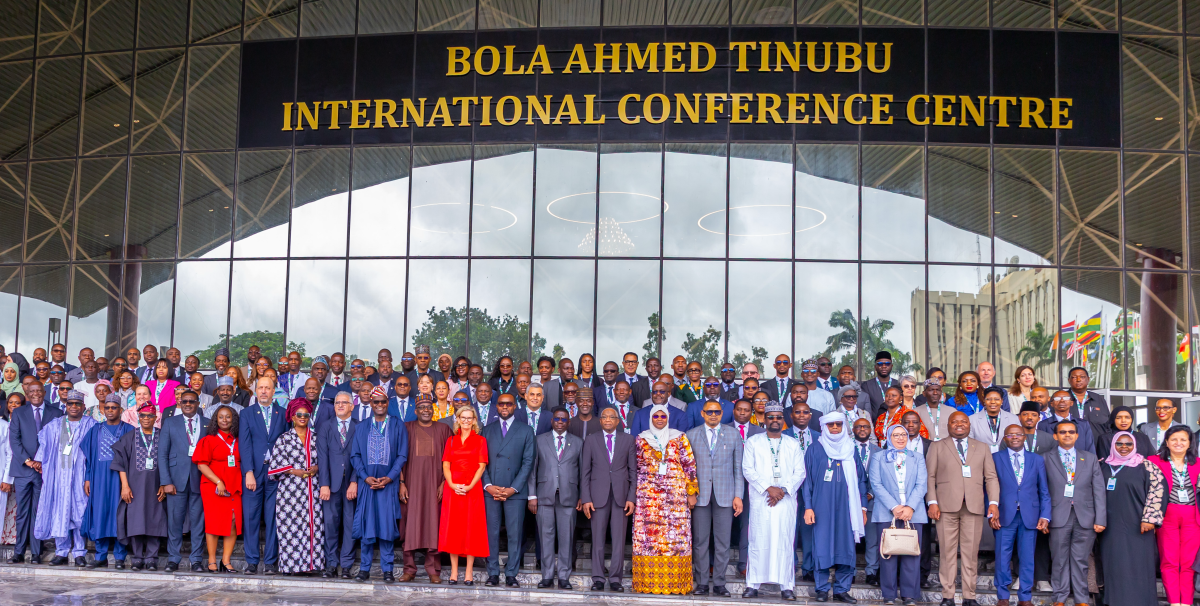

The High-Level Segment of the 7th Ordinary Session of the African Telecommunications Union (ATU) Conference of Plenipotentiaries (CPL-26) commenced today in Abuja, with the Vice President of the Federal Republic of Nigeria, His Excellency Senator Kashim Shettima, GCON, serving as Special Guest of Honour. The Conference brings together Ministers responsible for Information and Communication Technologies (ICTs), Heads of Regulatory Authorities, industry leaders, development partners, and policymakers from across the 52 Member States of the African Telecommunications Union (ATU) to chart the continent’s digital future.
Hosted by the Federal Government of Nigeria through the Federal Ministry of Communications, Innovation & Digital Economy, the two-day High-Level Segment will deliberate on strategic priorities including digital infrastructure, meaningful connectivity, Artificial Intelligence (AI), cybersecurity, spectrum management, digital skills, and Africa’s coordinated engagement in global digital governance. The Conference will also elect the Union’s leadership for the next four-year cycle and adopt key policy and governance decisions that will shape Africa’s telecommunications and digital economy agenda.
In his opening address, Nigeria’s Vice President, His Excellency Senator Kashim Shettima, GCON, who was represented by Senator Ibrahim Hadejia, Deputy Chief of Staff to the President, reaffirmed the Federal Government’s commitment to regional digital cooperation and innovation-driven development. He noted that “Africa must assume a more prominent role in shaping the global digital agenda. For too long, global technology policies have been developed without adequate representation of African priorities and perspectives, that must change. Nigeria is proud of its contributions within both the African Telecommunications Union (ATU) and the International Telecommunication Union (ITU), and we remain committed to ensuring that Africa is not merely present at global discussions but actively shaping decisions that define the future for digital technologies.”
In his address, the Honourable Minister of Communications, Innovation & Digital Economy, Dr. ‘Bosun Tijani, described the Conference as a defining opportunity for Africa to strengthen cooperation and advance a shared digital vision.
“The Conference of Plenipotentiaries is where Africa reflects on its progress and charts a common course for the future. At a time when digital technologies are reshaping economies and societies at an unprecedented pace, our responsibility to work together has never been greater. Today, we gather to strengthen the partnerships and shared resolve that will ensure Africa continues to play a leading role in shaping the future of telecommunications and the digital economy.”
He further emphasised the importance of Africa speaking with one voice on global digital issues, noting that “Africa must arrive prepared, united and credible. We must continue to invest in technical preparation, strengthen regional cooperation and speak with one voice where our interests align. Where global digital rules are being shaped, Africa must be ready to participate and help shape outcomes that affect our people, our economies and our future.”
He added that Nigeria was honoured to host the Conference in line with President Bola Ahmed Tinubu’s vision of strengthening regional cooperation and building an innovation-driven digital economy.
A highlight of the opening ceremony was the official launch of the ATLAS Network, a continental initiative announced by the Honourable Minister to accelerate the development of locally relevant Large Language Models across Africa. Building on Nigeria’s pioneering N-ATLAS initiative, the Network will bring together governments, researchers, academia, innovators, and ecosystem partners to ensure that Africa’s languages, cultures, and knowledge systems are reflected in the AI technologies shaping the continent’s future. Member States were invited to join the initiative as a collaborative platform for advancing African AI capabilities.
The Secretary General of the African Telecommunications Union, John Omo, welcomed delegates and described the Conference as a pivotal moment for the continent’s digital future.
“We are deeply grateful to the Government and people of the Federal Republic of Nigeria, whose support made this Conference possible. The Union’s work rests on the commitment of its Member States and the partnerships we continue to build to place ATU on a firmer and more sustainable footing. The Union recognises the important role of partnerships in the achievement of its mission. We therefore recognise GSMA, QUALCOMM, ICANN, and our Tower Companies who extended their hand of collaboration to ATU during this CPL-26,” he said.
Over the course of the Conference, delegates will consider strategic, financial, and governance matters affecting the Union, adopt resolutions that will guide the implementation of Africa’s digital priorities for the 2027–2031 period, and strengthen the continent’s common position ahead of the International Telecommunication Union (ITU) Plenipotentiary Conference later this year.
Hosting CPL-26 reinforces Nigeria’s growing leadership in Africa’s digital transformation and reflects the Federal Government’s commitment to leveraging technology, innovation, and regional collaboration to accelerate socio-economic development across the continent.
#END#
About the Federal Ministry of Communications, Innovation & Digital Economy
The Federal Ministry of Communications, Innovation & Digital Economy (formerly known as the Federal Ministry of Communications Technology) was created in 2011 to drive economic growth through digital technology and innovation. The Ministry was created to facilitate ICT as a key tool in the transformation agenda for Nigeria in the areas of job creation, economic growth, and transparency of governance.
About the African Telecommunications Union
The African Telecommunications Union (ATU) is the African Union’s specialised agency for telecommunications and information and communication technologies. Its membership comprises 52 Member States, 56 Associate Members drawn from the telecommunications and digital technology sector, and 18 Academia Members. ATU provides the continental forum through which governments, regulators and industry coordinate policy, spectrum, standards and common African positions for international negotiations. The Union also works with its membership and partners to expand connectivity, strengthen digital infrastructure, support innovation and advance Africa’s interests in global telecommunications processes.