
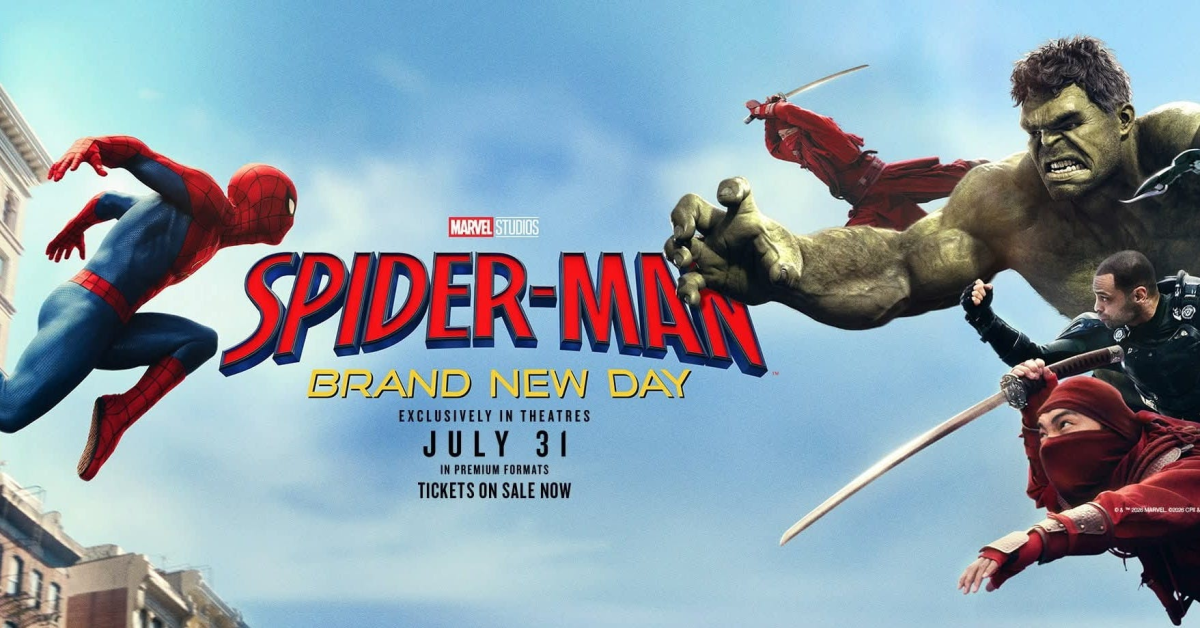

Titanic spent years as the highest-grossing film in the world, then returned to the top after re-releases. Spider-Man: Brand New Day has taken a very different route to the record books. In just five weekends, Tom Holland’s fourth solo Spider-Man film has moved past Titanic worldwide, reaching roughly $2.33 billion and becoming the fourth-highest-grossing movie ever. The speed of that climb is more interesting than the ranking itself.
The film opened domestically to $360 million and has remained No. 1 in North America for five consecutive weekends. Its fifth weekend brought in another $22.5 million, a 42% drop from the previous weekend. For a film this large, that kind of hold is unusually strong. Its fourth weekend had already fallen by about 45%, so the decline is slowing even as the film moves deeper into its run.
Part of the explanation is obvious. Spider-Man is one of the few characters with recognition that crosses age groups, countries and generations. The character has been on screen for decades, while Tom Holland’s version has benefited from Marvel’s wider universe and the enormous success of Spider-Man: No Way Home. Audiences are arriving with familiarity before they even enter the cinema.
There is also the question of franchise fatigue. Hollywood has spent years producing interconnected sequels, spin-offs and reboots, and audiences have become more selective about which franchises still deserve a cinema trip. This year’s box office has exposed that divide. Long-running properties with strong audience attachment have continued to work, while some heavily promoted franchises have struggled to turn brand recognition into urgency.
Brand New Day has managed something different. Its marketing has kept the film visible, but the response has also been unusually persistent. The movie is still occupying thousands of screens in its fifth weekend, and exhibitors continue to rank it ahead of new releases. That matters because box office longevity is partly a demand story and partly a distribution story. A film cannot keep earning if cinemas stop giving it places to play.
Ticket prices also complicate comparisons with older blockbusters. A dollar earned today does not represent the same number of tickets sold twenty or thirty years ago. Spider-Man’s worldwide total is therefore a useful measure of commercial scale, but it does not mean audiences bought more tickets than Titanic audiences did. Inflation-adjusted rankings tell a different story, particularly for films that played for long periods and returned to cinemas repeatedly.
That is important because Titanic and Avatar built their reputations over long theatrical lives. Spider-Man is compressing that process into weeks. It crossed $2 billion globally in just three weeks and passed Titanic after its fifth weekend, while continuing to add tens of millions domestically every week. The theatrical window may still be long, but the acceleration is new.
The bigger change may be what studios learn from it. A blockbuster can still become a cultural event if audiences believe there is a reason to see it now, even when the character is already familiar. That urgency can come from spectacle, nostalgia, curiosity, or simply the feeling that missing the film means missing part of the conversation.
Spider-Man: Brand New Day is therefore less a story about superheroes suddenly becoming popular again than about how durable a major franchise can be when audiences still feel invested in it. The film has not needed the slow burn that once defined the biggest box-office records. It has found a way to keep its audience coming back almost every weekend.
Titanic needed years of re-releases and repeated cultural revivals to build its place in box-office history. Spider-Man needed 31 days to overtake it. The numbers are impressive, but the more useful question for Hollywood is why audiences are still willing to return so quickly when so many other franchises can no longer persuade them to make the same trip.