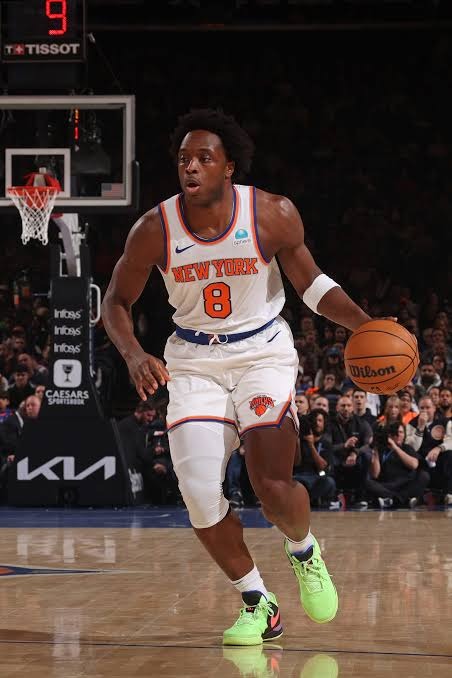


The New York Knicks ended their 53-year championship drought on Saturday night by defeating the San Antonio Spurs in Game 5 of the NBA Finals. Jalen Brunson dominated the box score, but the Nigerian internet immediately locked its sights on forward OG Anunoby. Following his Game 4 game-winning tip-in that completed a historic comeback, social media timelines transformed into a national celebration, claiming the British-Nigerian athlete. This rapid shift highlights a classic cultural ritual: selective diaspora adoption, where national pride is aggressively manufactured only after international success is fully secured.
The pedigree data is undeniable. His real name is Ogugua Anunoby. His late mother, Grace Ndidi Okereke, competed as a national-level sprinter for Nigeria. Even the Knicks’ head coach, Mike Brown, spent years scouting talent and leading Nigeria’s men’s national basketball team, D’Tigers. Yet, the viral enthusiasm ignores the structural friction that defines his history with the country. In 2021, the Nigerian Basketball Federation named Anunoby to the preliminary roster for the Tokyo Olympics, only to drop him from the final training camp. This administrative choice shows how local sports bodies handle elite talent until a player forces their way to global prominence independently.
This pattern places Anunoby alongside figures like Anthony Joshua and Israel Adesanya in a specific pantheon of athletic exports. The domestic audience routinely overlooks early developmental qualifiers, training camp deficits, and the financial barriers that athletes face before reaching the elite tier. Once a championship belt or an NBA trophy is lifted, the narrative shifts toward bloodlines and cultural heritage. This selective embrace exposes deep cracks in the country’s sports development architecture, where institutional funding remains chronically absent during formative years.
Relying on foreign facilities to train elite athletes while claiming the finished product is an unsustainable model for Nigerian basketball. The loud cheers on the timeline mask the quiet collapse of grassroots sports infrastructure across the country. Celebrating a championship in Madison Square Garden does nothing to fix the administrative errors that routinely push top-tier talent into foreign jerseys. This sudden rush of diaspora adoption shows that local authorities prefer the optics of success over the gruelling work of talent cultivation.