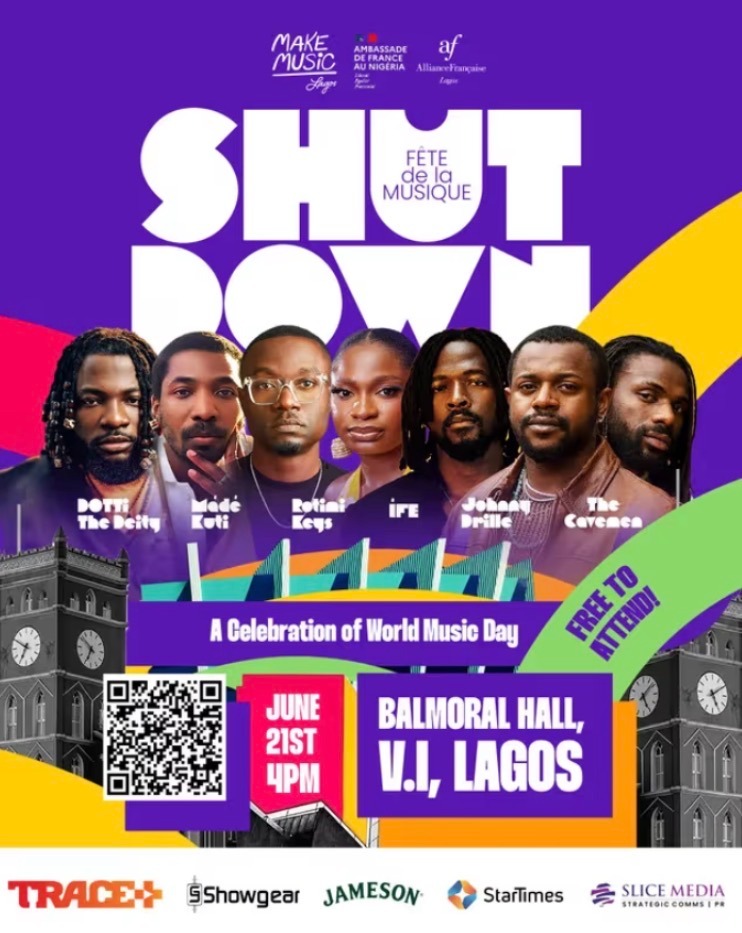


Make Music Lagos kicks off its World Music Day events this week, running from June 18 to 21. The festival features live performance advocates like Johnny Drille, Made Kuti, and The Cavemen, shifting the local conversation toward Nigeria’s acoustic landscape. In a digital-first market, songs are routinely engineered to secure short viral moments on platforms like TikTok. This streaming layout has led to a rapid decline in complex live arrangements, making the upcoming festival a critical testing ground for the survival of live instrumentation.
The dominance of data-driven algorithms has transformed studio production into a highly formulaic process. Producers prioritise immediate hooks and loop-heavy beats that fit the structural constraints of streaming platforms. This preference strips away the nuances of live horn sections, complex drum fills, and bass guitar progressions. While these digital tracks perform exceptionally well on global distribution networks, they diminish the demand for full live ensembles. The upcoming Music Business Conference on June 18 aims to address this deficit by bringing together industry stakeholders to discuss ways to revitalise live music culture within the broader ecosystem.
The core challenge for independent artists remains entirely financial. Maintaining a professional live band requires significant capital for rehearsals, equipment transport, and fair performance fees. In the current economic climate, characterised by high inflation and rising venue logistics costs, most independent musicians cannot afford to bypass digital backing tracks. Operating with a laptop and a microphone is far cheaper than paying a seven-piece band. This stark economic divide leaves live instrumentation as a luxury reserved for a few established acts, limiting the commercial viability of Nigerian music performers who want to scale their stage presence organically.
The event organisers are attempting to bridge this gap through initiatives like the Battle of the Bands competition. Spotlighting finalists like The African Folk Band and The Royal Bards provides emerging talent with exposure to alternative funding models and institutional support from cultural partners like Alliance Française. However, long-term sustainability depends on whether the corporate sector and digital platforms can incentivise the production of full-band recordings. Until the financial metrics of the streaming economy reward the high cost of acoustic production, live arrangements will remain an endangered art form outside of specialised festival stages.