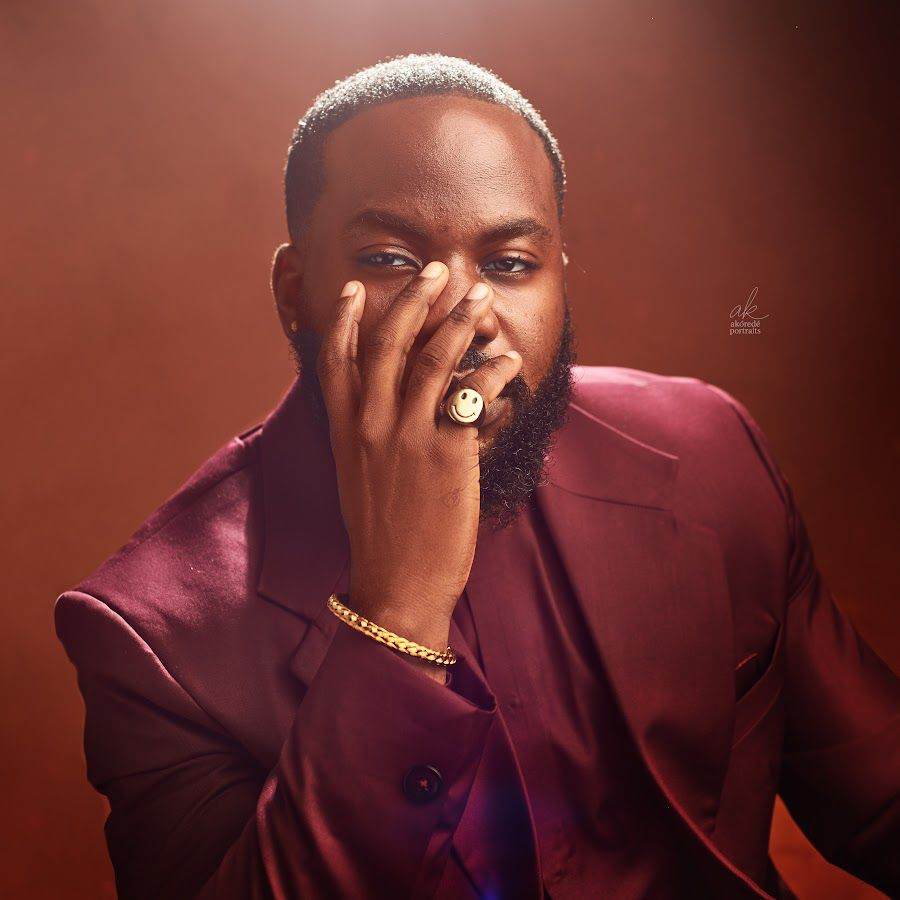


Question 1: Hi Jay, before the followers and recognition, before content and radio, who was Jayonair and what pushed you into content creation?
Answer 1: Honestly, radio came first, and it came long before anything else. I’ve been actively on radio for about 12 to 13 years now, starting out through internships and working my way up from there. It’s been a real journey.
Content creation, though, has a different kind of story.
I had been based in Lagos at some point, then I left, and when I eventually came back, I returned with a lot of hope. I was certain things would fall into place, that I’d land a job at a radio station, that life would pick up where it left off. But that’s not what happened. The jobs didn’t come, and I found myself in a really dark place. Sad, depressed, and without work, because I had left my previous job to make this move. It was a genuinely terrible period.
Social media became my escape. At the time, I was using it the way most people did, posting pictures, sharing motivational thoughts, nothing serious. Then I started recreating sounds, mostly on TikTok. It wasn’t a strategy or a plan; it was something to do with my hands and my mind while I figured out my next move. A way to get out of my own head.
People responded to it. They loved the recreations, so I kept going. Eventually I started creating original content, and people loved that too. The rest, as they say, is history.
The truth is, becoming a content creator was never something I mapped out. I’m a millennial in my 30s, we didn’t grow up seeing content creation as a career. The word itself wasn’t even in my vocabulary. It wasn’t a plan B or even a plan Z.
It found me through one of the hardest seasons of my life. Sadness, depression, and joblessness led me here, and somehow, I built something out of it.
Question 2: What was the Aha moment when you realized, “This content thing might actually become something big”?
Answer 2: I wish I could pinpoint the exact moment I first got recognised as Jay On-air. But if I’m being honest, it really hit home when I started receiving acknowledgement from people I had grown up watching.
I was working with Premier Cool at the time, doing some influencing for them, when MI Abaga walked up to me and he said, “Oh, hi, Jay On-air. I’m such a huge fan. You’re doing fantastic work.”
I grew up on MI’s music. One Naira, all his albums, that was my world. So to have him seek me out in that room and say those words was something else entirely. I don’t chase validation, but I won’t pretend that didn’t mean everything in that moment. It stopped me in my tracks. This thing I had started quietly, in the corner of my room, had become something real enough for MI Abaga to notice.
What made it even more remarkable was the depth of what he said. He wasn’t just being polite. He spoke about the quickness of what I do, broke it down with the kind of sharp, thoughtful analysis you’d expect from him, and said things about my work that I hadn’t even consciously thought about myself. MI is an incredibly intelligent person, and hearing him articulate something I had been doing almost instinctively made me pause and think, I didn’t even realise that’s what I was doing.
I’ve likely had other meaningful moments before that one, but that encounter has never left me. It remains one of the most humbling experiences of this entire journey.
Question 3: Your content feels very authentic and fast — how do you create your content so fast and still remain true to yourself in this industry, we want the tea?
Answer 3: The speed at which I create content was something I stumbled into. But looking back, it makes complete sense. I’m a trained journalist, and one of the first things journalism teaches you is that news has a shelf life. The moment something stops being current, it stops being news. That instinct is deeply wired into me, so when something is trending, when people are talking about it, I want to be on it immediately. That journalistic urgency transferred naturally into the way I create.
But speed is only one side of what I do. When you visit my social media, you’ll find a beautiful sandwich, and I mean that in the best way. There’s the fast, reactive content. There’s relatable, everyday stuff. There’s event hosting. There’s personality. It’s layered, and I’ve always been intentional about that, even when people told me I was doing too much.
Early on, a lot of people advised me to pick one lane. They pointed to creators like Taooma and Mr. Macaroni, who were well known for a single character, and said that was the formula — find your one thing, and blow faster. And maybe they were right about the timeline. It probably did take me longer to break through because of my approach. But I couldn’t make myself shrink the creativity. My creative instincts were pulling me in multiple directions, and I chose to follow them.
That decision has quietly become one of my greatest assets. Because I never locked myself into one character or one type of content, my brand is genuinely diverse. I can work with a tech company, a fashion label, a lifestyle brand, the range is there. Brands have options when they come to me, and I think that’s a direct result of not following the conventional advice.
I also think there’s something to be said for not being precious about posting. My standard isn’t perfection or virality, it’s simply whether I’m comfortable with it and whether it could harm anyone. Whether the content I post gets a million views or one view, I’m at peace with it. That mindset has kept me going longer than any strategy has.
And I’m not afraid to evolve. Recently, I started making reaction videos where I play a post or a clip for my followers and talk them through my thoughts on it, and the response has been really good. That’s what happens when you stay open. New ideas find you, and you’re not too rigid to try them.
Question 4: If social media disappeared tomorrow, what do you think Jayonair would still be known for?
Answer 4: If there’s one thing I hope defines me, it’s positivity and I mean that sincerely. It is something I care deeply about in every story I tell.
I’m Nigerian. There is no shortage of heavy, heartbreaking news. It can wear you down to the point where you just want to log off and disconnect from everything. I want to be the antidote to that. The page, the person, the presence that people genuinely look forward to; something that lifts the room rather than adds to the weight.
Earlier this year, I interviewed Timini Egbuson on my podcast, and a comment stopped me in my tracks. Someone wrote that they had never seen Timini in that light before, and that the way I asked my questions brought something out of him they hadn’t witnessed elsewhere. That comment meant everything to me, because that is exactly the point. That is precisely what I am here to do, create moments that bring joy, warmth, and something good into the atmosphere.
So when I’m no longer here, that is what I want to leave behind. Not just content, not just numbers, but the feeling that Jay On-air was someone who made people’s lives a little brighter. That I lived in a way that brought joy to people.
That, for me, is enough.
Question 5: Do you believe the influencer market is going to die soon, and what does evolving look like for you?
Answer 5: I’ve never done just one thing and I don’t think I ever will. Event hosting is a big part of what I do. I recently put together the World Culture Festival, bringing HR leaders and business leaders into one room to have honest conversations about work environments. It’s already shaping up to be an annual event, and there are more events in the pipeline throughout the year. That’s always been the nature of my life, I’m never in one place, never doing just one thing. There’s the acting, the content, the show I host, and now the events. These are all things I’m genuinely passionate about, not just things I fell into.
On the question of influencer marketing dying, I don’t believe it. I think it’s evolving, and there’s a difference. The anxiety people feel around it is real, but the answer isn’t to panic. The answer is to keep evolving. I said it in someone’s comment section and I’ll say it again: brands need to see why they need you. You have to remain part of the conversation, part of the discourse. That doesn’t happen by accident.
I found myself in this career, yes but I’ve done something with it. And that’s the distinction. When content creation starts paying your bills, the moment it becomes income, you have to shift your mindset and treat it like a profession. Ask yourself: what do I need to learn? How do I need to grow? What does the industry require of me now? I didn’t start with the setup I have today. I was filming on an iPhone 6 or 7 when I began. The world moved, and I moved with it. You can’t afford to stay where you started when everything around you is changing.
That’s what I’d say to every creator and influencer out there, evolution is not optional. And you can’t evolve without knowledge. This is actually something I feel strongly about: helping younger creators understand their worth and see the bigger picture of what this industry can be for them. I don’t know exactly what form that will take yet, but I see it becoming a real part of what I do going forward.
At the end of the day, I’m not just an influencer. I’m not just a content creator. I’m someone who does multiple things, and that’s not changing. Influencer marketing will not die, it will just look different. The real question is whether you’ll be part of that new shape when it arrives. And you won’t be if you’re still holding on to how things used to work.