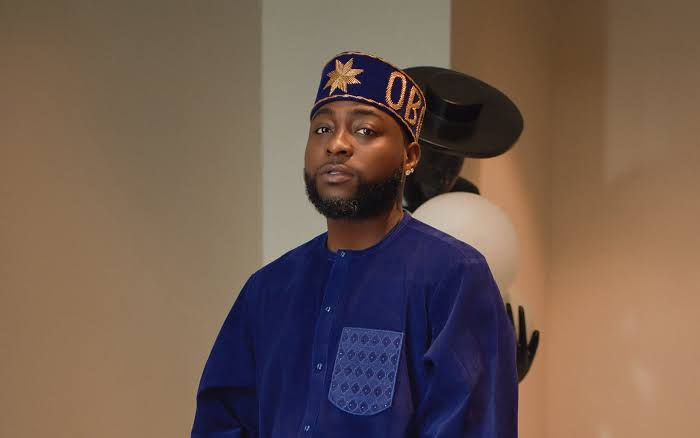


Davido has spent the past few months doing something unusual for one of Africa’s biggest music stars: putting his music career aside to campaign for his uncle. In May, he was unveiled as chairman of the Imole Youth Campaign Team and announced a two-month music hiatus to support his uncle’s re-election campaign. He has since moved beyond the usual celebrity appearance at a rally, speaking directly to voters and taking increasingly firm positions on the contest. He has since moved beyond the usual celebrity appearance at a rally, speaking directly to voters and taking increasingly firm positions on the contest.
That raises a question that has followed Davido since he first entered Osun politics: what exactly are we calling political influence? Is it the ability to make people pay attention, the ability to mobilise them, or the much harder ability to make them change how they vote? A similar question was asked about Davido’s new interest in politics and the optics of political influence during the 2018 Osun election. At the time, he was not merely supporting his uncle from a distance; he was campaigning, reporting events from polling units, and using his celebrity to keep the election in public view.
There is evidence that his involvement gets people talking. There is considerably less evidence that it determines how they vote. In 2022, Ademola Adeleke defeated Gboyega Oyetola with 403,371 votes to 375,027, but reducing that victory to Davido’s campaigning would be an enormous leap. Adeleke had the family name, a political structure, a party, and his own support in the state. Davido was one part of a much larger campaign.
This year, however, Davido has made the question harder to dismiss because he is behaving less like an entertainer endorsing a candidate and more like someone who has accepted a political role. His recent posts have included an outright attack on APC supporters in Osun, whom he described as “an enemy of progress”, and a warning to Accord supporters after claiming he had received information about plans to arrest members of their camp.
Then there was the post addressed to Donald Trump. Davido asked the US president to pay attention to the situation in Osun, citing concerns about violence, intimidation, and disruption of the democratic process. He appealed to the United States and the international community to watch the election and ensure that voters could exercise their rights freely. The post had reached 12 million views in the screenshot. Whatever one thinks of the decision to involve a foreign president in a Nigerian state election, it demonstrated the size of Davido’s megaphone. But a megaphone is not a constituency.
Most of the people who saw that post cannot vote in Osun. Neither can the millions of people who follow Davido from outside the state. Even among his followers here in Nigeria, being interested in Davido does not automatically make someone interested in Adeleke. And being interested in Adeleke does not necessarily mean being willing to vote for him.
There is another uncomfortable question here: is Davido’s political influence really his own, or is it an extension of the Adeleke family’s influence? His uncle is not an unknown politician who stumbled into power because his nephew is famous. The Adeleke family has been politically established in Osun for decades. Isiaka Adeleke was the state’s first civilian governor and represented Osun West in the Senate, while Ademola Adeleke later represented the same senatorial district. Davido brought an enormous entertainment audience into that existing political network.
That family connection is difficult to separate from Davido’s political identity. A while ago, Davido and Portable clashed over the Osun governorship contest, showing how Davido’s support for the PDP was closely tied to his uncle’s candidacy. The clash showed just how directly Davido had inserted himself into the contest. Even Davido’s current political break from music is explicitly about securing another term for Adeleke.
So, is it just about his uncle? Right now, mostly, yes. That does not necessarily make his involvement fake. Family interest and political conviction can exist at the same time. Davido has also shown an interest in political participation beyond this particular election, including his earlier calls for young Nigerians to engage with politics. The more interesting question is whether that interest survives when there is no Adeleke on the ballot.
But there is the question Davido cannot answer for his uncle: has Adeleke actually worked for the people of Osun?
The governor has plenty to campaign on. His administration says it has reduced the state’s debt by more than 40 percent, paid inherited salary and pension arrears, rehabilitated more than 200 health centres, improved Osun’s national examination ranking, and constructed or rehabilitated hundreds of kilometres of roads. These are substantial claims, although they are primarily figures presented by the Adeleke administration and should not simply be treated as independent proof of performance.
That distinction matters because Davido is not campaigning merely for people to vote. He is campaigning for Adeleke to continue governing. If his argument is that his uncle deserves another term, then the governor’s record has to do some of the work. Celebrity cannot substitute for performance.
This is ultimately where Davido’s political influence becomes difficult to measure. His ability to generate attention is obvious. His ability to dominate conversations is obvious. His ability to mobilise a youth campaign is more tangible now that he has a formal role. But whether any of that can independently move enough Osun voters to change an election remains unproven.
Maybe that is the fairest way to understand Davido’s political power. It is real, but its limits are hidden by its visibility. He can make millions of people look at Osun. He can make an election feel culturally significant. He can put pressure on politicians and draw international attention to a local contest. But when the votes are counted, Davido will not be the one deciding the election; Osun voters will.