

A single football match can trigger more economic activity across Nigeria than a month of targeted corporate campaigns. The ninety minutes of the World Cup final function as a massive liquidity injection into the local informal economy. Bars and local viewing centres see an immediate explosion in consumer transactions. This surge in spending occurs because the event forces millions of citizens to gather simultaneously, overriding the usual economic hesitation that limits daily purchases. When a tournament reaches this scale, football ceases to be mere entertainment. It transforms into a critical engine of fast-moving commerce.
Corporate giants systematically engineer their annual marketing spends around this high-attention window. The tournament saw aggressive promotional battles across both physical and digital media. Bet9ja capitalized on intense consumer engagement through its “World Cup Streak” campaign, offering a ₦50 million grand prize draw alongside cash giveaways for fans who successfully guessed the exact minute of the final’s opening goal. At the same time, telecom networks like MTN Nigeria deployed targeted data bundles under their primary football themes to keep millions of fans connected to mobile streaming applications. Beverage giants like Coca-Cola Nigeria launched their global “Uncanned Emotions” campaign, anchoring the concept locally with premium fan zone viewing centers to capture immediate consumer loyalty.
This localized boom relies entirely on the rapid mobilization of merchants who capture small-scale disposable income. Viewing centres across Lagos double their seating capacity using simple plastic chairs to accommodate the overflow. Street food vendors double their nightly inventory of suya and drinks to handle long queues that form hours before kickoff. Concurrently, ride-hailing drivers maximize their earnings by targeting late-night routes as thousands of fans leave public venues at midnight. Digital content platforms experience a parallel surge in traffic. Meme pages and sports creators execute aggressive monetization strategies to capture the attention of a highly active online audience.
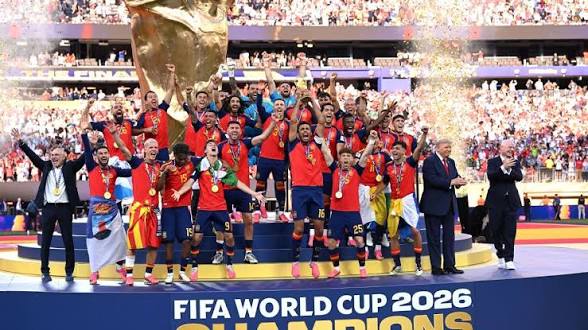
International media focused heavily on the historic achievement where Spain won the men’s World Cup final against Argentina. Meanwhile, the domestic impact inside Nigeria was measured entirely in local cash flow. The match creates a temporary economic sanctuary where inflation briefly takes a backseat to shared cultural experience. Brands that successfully plug their marketing into this collective attention cycle secure long-term consumer loyalty far more effectively than through standard advertising campaigns. Football becomes everybody’s business the exact moment a shared national obsession forces a massive, synchronized opening of wallets across the country. The real winner on football’s biggest night is not the squad lifting the trophy under stadium lights, but the thriving ecosystem of local merchants and corporate advertisers who turn collective attention into immediate revenue.