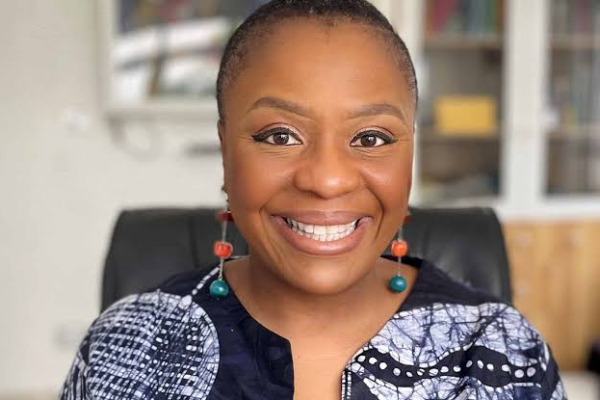



Question 1: Hi, Akinyemi, you are known as Africa’s Finest. If you could explain this in 3 words, what would they be?
Answer 1: I would say trustworthy, passionate, and visionary.
Question 2: As African music becomes increasingly global, do you think the legal and commercial infrastructure supporting the industry is evolving at the same pace as the creative side, and where do you see the biggest gaps today?
Answer 2: The legal infrastructure across Africa is not evolving fast enough to keep pace with the technology being used to exploit music. Our lawmaking and business practices are constantly playing catch-up. But by far the biggest gap is the absence of a comprehensive legal framework that enables the proper monetisation of creativity, especially in music.
Licensing needs to be fixed. Every consumption of music must be properly monetized, and licensing is the mechanism that makes that possible. If you look across different territories on the continent today, we do not have collecting societies ensuring that musical works are properly licensed.
I want to keep this simple because it’s important that people understand the core issue: there must be a proper system for monetizing music use, and licensing is the answer.
Look at the developed music markets: the US, Germany, England, and Japan. In those places, licensing is taken with the utmost seriousness. Licensing is simply permission to use music. Before any record can be played on the radio, on television, in clubs, restaurants, or any public space, it must be properly licensed. There must be a system in place to ensure that the people who own those works receive compensation every time their music is used.
That is what we need to build in Africa. When the licensing regime is properly structured, creators of musical works will be compensated, and we can develop self-sustaining music markets within the continent. We will no longer need to depend on legal regimes outside of Africa to get our creators paid.
Right now, too many African songwriters and record producers rely on foreign rights management companies and collection societies to collect what is rightfully theirs. That is deeply concerning, and it is a problem we must urgently solve.
Question 3: The Nigerian music industry has produced world-class talent, but sustainable wealth creation often depends on ownership and rights management. What role are Amelia Songs and Hightower playing to ensure artists and creators better position themselves to retain value from their work in the long term?
Answer 3: Amelia Songs and Hightower Solicitors are two distinct entities that I am fortunate to be a part of. Hightower Solicitors is the law firm, while Amelia Songs is an entertainment company. What connects them is that I founded both.
At Hightower Solicitors, we champion creators. We look after their legal affairs and business development, and that has been our focus since the firm was established. In the course of that work, however, we identified significant gaps, particularly around rights management. It was those gaps that led me, as an individual, to step beyond the law firm and build a solutions-focused company.
That company is Amelia Songs, a music publishing company dedicated to helping creators build and administer their catalogs and to providing broader creative support. Nigeria is extraordinarily blessed with talent, but talented people often need experienced guidance across many areas. Amelia Songs exists to provide exactly that.
I have gradually stepped back from the day-to-day running of the law firm. I have trained many lawyers over the years, and it is those lawyers who now run Hightower Solicitors. I remain a lawyer, but my focus has shifted. Today, most of my energy goes into the work I do through Amelia Songs.
Songwriters and record producers need a company like Amelia Songs, one that can provide the creative support, catalog management, and administrative expertise required to turn their creativity into lasting prosperity. That is the mission, and these two entities, though distinct, together reflect everything I have built and everything I believe in.
Question 4: Is the mantra “Afrobeats to the world” still true and Looking ahead five to ten years, what changes, whether regulatory, commercial, or cultural, do you believe are necessary for Nigeria to not just export music but to build a truly mature and globally competitive music industry ecosystem?
Answer 4: Afrobeats to the world is still alive and true. As long as Nigerians remain creative, as long as we are a people who love to celebrate life and culture, that will not change. Music, at its core, is a commercial product that captures a moment in time. The music of the 70s captured the reality of the 70s. The music of the 80s did the same. And music will always evolve — what we witnessed over the last five to ten years cannot remain the same going forward.
Creativity will always be in abundance. That is not the concern. What we must think carefully about is the impact of technology on how music connects with people, and equally, how technology can help us build a truly self-sustaining music market in Nigeria. These are questions that creatives, investors, and industry practitioners must constantly engage with because we are never static as people or as a business. Change is the only constant, and the music industry is no exception.
When it comes to what needs to change, the most important thing is building a self-sustaining music industry, one where every part of the value chain can thrive within Nigeria. Record companies, music publishing companies, radio and TV stations, touring businesses, talent management companies, music lawyers, and photographers—all of these people must be able to earn and prosper without having to leave the country to do so.
Right now, a significant portion of funding for Nigeria’s biggest talents comes from outside the country. We do not have enough venture capital firms at home actively identifying and amplifying homegrown talent. Too often, the money comes from New York, London, Berlin, or Los Angeles to develop artists who are entirely Nigerian. Why can we not raise enough capital within our own system to take talent from ground zero to the highest level? Why must it be a major foreign label that recognises the potential in a Nigerian artist and builds them into a global name? When will we see local labels doing work of genuine international impact?
Those are gaps we must fill. Beyond funding, our collecting societies in Nigeria must begin operating at full capacity, powered by technology and driven by properly trained professionals. There are tens, if not hundreds, of lawyers and accountants with a passion for the music business who can be trained to work within these societies and deliver the quality of service Nigerian creators deserve.
These are the changes that will define whether we build a truly prosperous music market over the next five, ten, or twenty years.
Question 5: If you could implement one reform tomorrow that would have the greatest impact on the future of African music, what would it be, and why?
Answer 5: I hate to sound like a broken record, but if I could fix one thing overnight, it would be this: a solid, fully functional Nigerian collecting society, one that stands alongside the PROs and BMIs of this world in terms of credibility and capability. A society where creators can become members, log into a dashboard, register their works, track their income, and truly understand the data behind how their music is being consumed. Fix that one thing, and everything else begins to fall into place. Creators will feel it. The industry will feel it. And I have no doubt that many people will be grateful for it later.
Question 6: Two Truths & A Lie with Akinyemi Law
- Statement 1: The music industry in Africa is the biggest music industry in the world.
- Statement 2: African music is built on storytelling, especially a tradition that reflects the childhood experience of what it means to be African.
- Statement 3: There is talent spread across every territory in Africa, and I believe Africa holds great potential.
Answer: The lie is that the music industry in Africa is the biggest music industry in the world.