
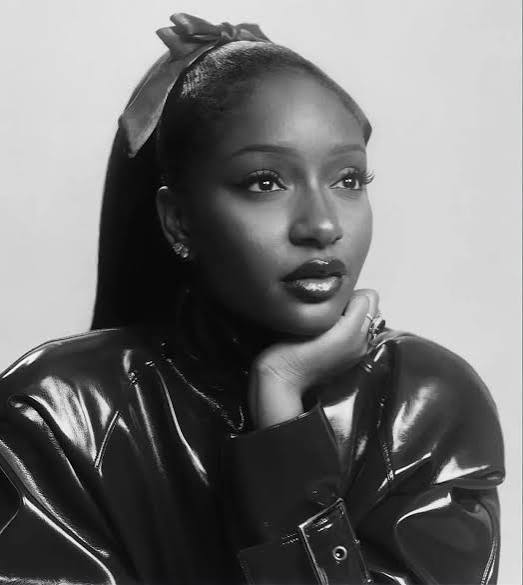


Ayra Starr has spent the last five years becoming the kind of artist Nigerian music needs to take seriously. She arrived with 19 & Dangerous at 19, turned 21 with an album that documented the messiness of growing up in public, and has since moved further into the global pop conversation. Now, with Starr Girl, which drops tomorrow, she is facing a different challenge. She is no longer introducing herself. She is deciding what kind of artist she wants to become.
That makes this album more important than its position as her third studio project might suggest. Commercial success is no longer enough to prove Ayra Starr’s relevance. Her sophomore album, The Year I Turned 21, became one of the strongest statements of her artistic growth, while her run of international collaborations and performances has pushed her further into the global pop conversation. The question Starr Girl now has to answer is whether that momentum can become something more permanent.
Breakout albums are usually about discovery. Legacy albums are about direction. When an emerging artist releases a project, listeners want to know who they are. When an established artist returns, they want to know what has changed. That is the pressure Ayra now faces. She has already shown that she can make hits; the harder task is proving that she can keep evolving without losing the identity that made people care in the first place.
That evolution has been visible for some time. A look at Ayra Starr’s evolution shows an artist who has moved considerably beyond the teenager introduced by Mavin Records. The Year I Turned 21 gave her room to explore vulnerability, love, grief, and growing up, but it also demonstrated that she could stretch beyond the sound that first made her popular. Starr Girl arrives with the expectation that she should go even further.
The collaborations suggest that she is thinking bigger. Wizkid and Rema connect the album to Afrobeats’ established commercial centre, while Zayn Malik and Leon Thomas push it further into international pop and R&B. The wider guest list also takes Ayra into sounds and audiences that sit outside the straightforward Afropop lane she was initially associated with.
But impressive features cannot make an album important by themselves. If anything, they create another test for Ayra. Can she bring these artists into her world, rather than allowing their presence to define it? Her collaboration with Rema on “Who’s Dat Girl” already showed how comfortably she can turn a collaboration into an extension of her own pop identity. Starr Girl needs to take that confidence further.
There is also the question of where Ayra Starr fits into the next generation of Nigerian female pop. She is no longer simply part of a group of promising young women trying to break through. She is now one of the artists helping determine what that next generation looks like. Her efforts to bring African female artists together also suggest that her ambitions extend beyond her own catalogue. She is increasingly positioning herself within a wider conversation about what African women can do with global attention once they have it.
Her ambitions have become even clearer since her move to New York. The decision was not simply a change of address. As a deep dive into her New York move explored, the relocation has coincided with changes in her sound, fashion, and positioning within the global pop ecosystem. Afrobeats remains her foundation, but it is no longer the boundary of what she appears willing to explore.
That creates an interesting tension for Starr Girl. Ayra has to become more global without becoming less recognisable. She needs to experiment without sounding like she is chasing whatever happens to be popular outside Nigeria. And she has to prove that international collaborations can expand her audience without making her own artistic voice secondary to the names attached to the album.
This is why the album’s timing matters. Ayra is still young enough to experiment without having to defend a finished legacy, but established enough for those experiments to be judged seriously. Her 2024 breakthrough showed just how quickly she could move from promising Mavin newcomer to one of Nigeria’s most visible global pop stars. Starr Girl is where that trajectory begins to face its first real test of durability.
So the album does not need to prove that Ayra Starr is a star. She already is. It needs to establish whether there is enough artistic depth behind that stardom to sustain another decade of music.
If 19 & Dangerous was the introduction and The Year I Turned 21 was the coming-of-age chapter, Starr Girl is where Ayra gets to decide what comes next. The most important thing she can do now is not make another album that proves she can keep up. It is to make one that proves the future of Ayra Starr sounds like nobody else.