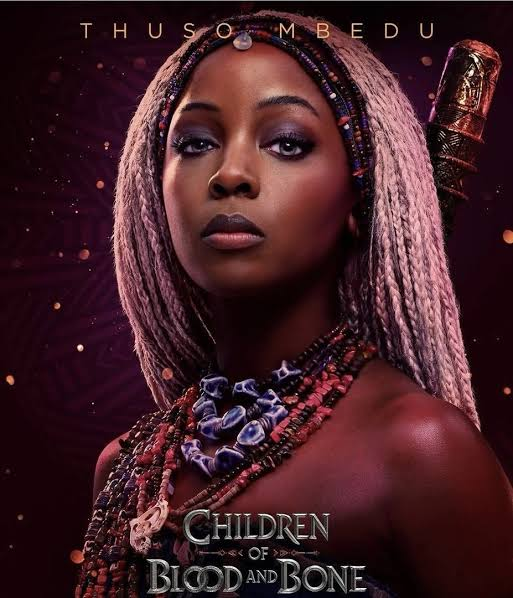


When the first trailer for Children of Blood and Bone dropped, much of the conversation focused on the cast. Nigerians debated the accents, questioned the representation and dissected Hollywood’s interpretation of a story inspired by Yoruba mythology. But another detail quietly signalled that this adaptation could be doing something Hollywood has rarely attempted with African music. It isn’t simply putting Afrobeats on a blockbuster soundtrack. It is building part of the film’s identity around it. That distinction matters because blockbuster soundtracks have evolved far beyond background music. Today, they are marketing campaigns, cultural moments and commercial assets rolled into one. Long before audiences buy cinema tickets, they are streaming soundtrack singles, creating TikTok trends and forming emotional connections with films they have not yet seen. In many cases, the soundtrack becomes the audience’s first introduction to the world on screen. Children of Blood and Bone appears to understand this. By appointing Tems as executive producer of the soundtrack and bringing together artists including Burna Boy for original music, the film is treating African music as a creative pillar rather than an afterthought. That may sound like a subtle difference, but it represents a significant shift in how Hollywood has traditionally worked with African artists.
Hollywood has embraced African music before, but mostly on its own terms. Black Panther remains the obvious example. Kendrick Lamar’s curation produced one of the most celebrated movie soundtracks of the last decade, while African artists shared space with American stars. Beyoncé’s The Lion King: The Gift also introduced millions of listeners to artists including Burna Boy, Wizkid, Tiwa Savage and Mr Eazi. Both projects expanded the global reach of Afrobeats, but African musicians largely contributed to creative visions that had already been established.
Children of Blood and Bone feels different because the collaboration appears to begin much earlier. Tems is not just performing a song for the credits. She is helping shape the musical direction of the project itself. That signals a growing confidence in African artists as creative partners capable of influencing how a blockbuster sounds, feels and connects with audiences. That confidence has not appeared overnight. Afrobeats has spent the last decade becoming one of the world’s most influential music movements. Burna Boy has headlined stadiums across Europe and North America. Wizkid and Tems have won Grammy Awards. Rema’s Calm Down became one of the biggest global records of the decade. Nigerian artists no longer need Hollywood to validate their global appeal; they have already built it themselves. The film industry is finally beginning to catch up.
There is also a commercial logic behind this evolution. Studios increasingly understand that audiences no longer engage with films only in cinemas. They experience them across playlists, streaming platforms and social media months before release. A soundtrack is no longer just something audiences remember after watching a film. It is often what convinces them to care about the film in the first place. That makes the choice of Tems more than symbolic. It is strategic. Music has always been one of cinema’s most powerful storytelling tools, particularly in fantasy. It introduces audiences to imaginary worlds before the first line of dialogue is spoken and often outlives the films themselves. Decades later, people still associate Titanic, The Bodyguard and Black Panther with the songs that defined them.
If Children of Blood and Bone gets this right, its soundtrack could become one of the film’s greatest cultural legacies. More importantly, it could reshape expectations around how Hollywood works with African musicians. Instead of licensing a few popular songs after production wraps, studios may begin inviting African artists into the creative process from the outset—as curators, collaborators and decision-makers whose contributions extend beyond a single track. That would represent a much bigger shift than another chart-topping soundtrack.
For years, discussions about African representation in Hollywood have centred on actors, directors and producers. Music has often been treated as a supporting element rather than part of the industry’s broader conversation about creative ownership. Yet soundtracks influence how films travel across cultures, how audiences remember them and how long they remain part of popular culture. Perhaps that is why Children of Blood and Bone matters beyond the film itself. If it succeeds, the legacy may not simply be that Afrobeats found another place in Hollywood. It may be that Hollywood finally recognised Afrobeats as something capable of shaping a blockbuster from the inside out. And that is a very different kind of cultural milestone.