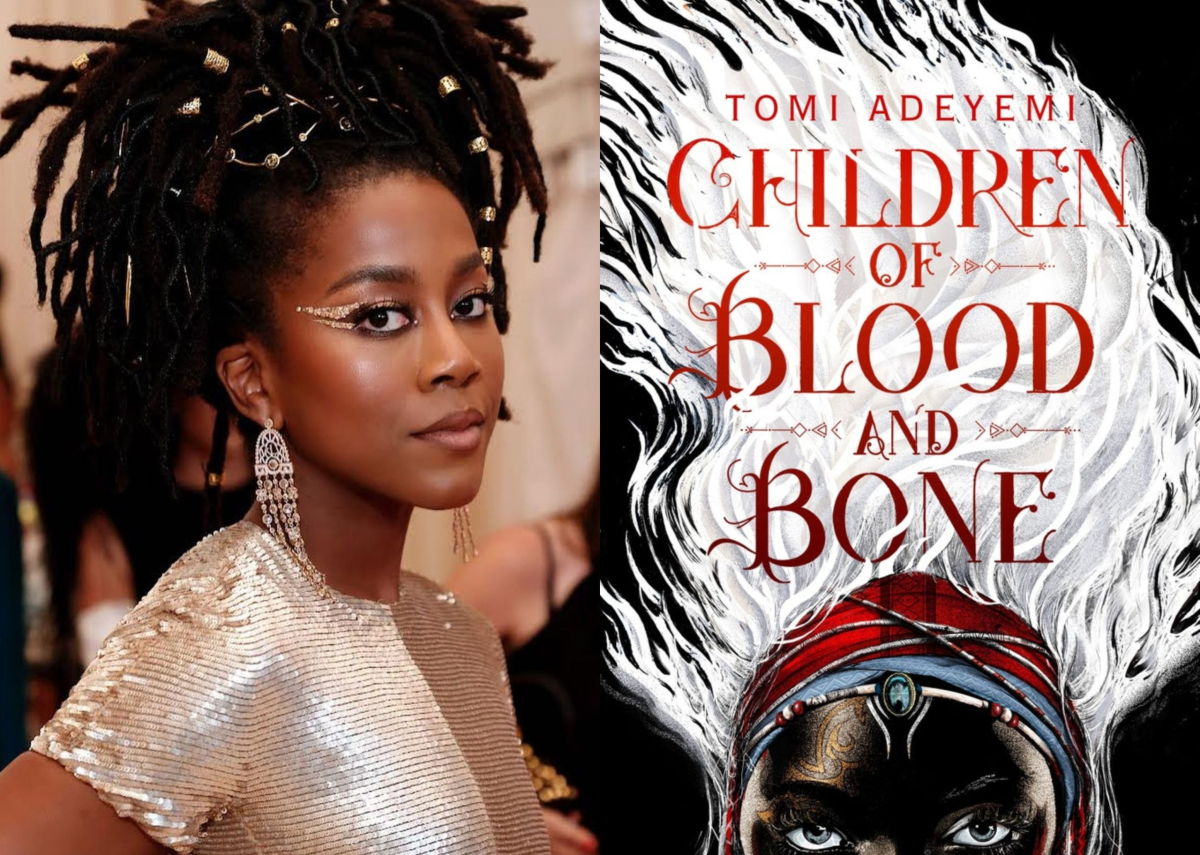


‘Children of Blood and Bone,’ a fantasy teen novel by American-Nigerian author Tomi Adeyemi, is facing controversy over the casting choices in its film adaptation. The conversation surrounding the book on social media platforms has been ongoing since news of the casting of the film’s main leads broke, with many wondering why a book that reportedly draws from Yoruba culture has a cast with no Nigerian or Yoruba origins.
The Response From The Author
The author of the books, Tomi Adeyemi, in response to the backlash after the cast was announced in 2025, claimed that more Nigerian casting would be announced. The turnout has shown fans that the number of Nigerian cast members is not befitting for a fantasy novel rooted in Yoruba culture.
If you’re wondering why the casting choices of critical roles have sparked so much controversy, here’s a quick breakdown of what the casts look like: Viola Davis will portray Mama Agba; Cynthia Erivo takes on Admiral Kaea; Idris Elba is Lekan; Amandla Stenberg plays Amari; Damson Idris stars as Inan; Tosin Cole as Tzain; Lashana Lynch as Jumoke; and Chiwetel Ejiofor as King Saran.
Hollywood’s History of Casting Non-Nigerians in Nigerian Roles
The biggest issue with the casting choice of the ‘Children of Blood and Bones’ film is that it is not Hollywood’s first time casting people with no Nigerian roots in Nigerian roles. The most recent case being with Chinua Achebe’s ‘Things Fall Apart,’ where Idris Elba was cast as ‘Okonkwo’ in the adaptation under work. It reflects a problematic history of there being talented Nigerian actors who are passed up for their American counterparts, who often adopt a Nigerian ‘accent’ or behavior motivated by what many have termed the ‘narrow-minded’ view of what Nigerians sound like or what we behave like, without fully understanding the essence of Nigerians.
While others have argued that the misrepresentation of Nigerians in Hollywood is a small price to pay for Nigerian stories or Nigerian-inspired stories. For us, it paints a picture of the importance of the growth in the filmmaking industry in Nigeria.
The Possible Impact of a Growing Film Industry on Misrepresentation
The film-making industry in Nigeria is still at a stage where, despite evident growth, Nigerian actors are not taken seriously enough to be considered the appropriate choice for films rooted in our culture. For there to be a change in how we are viewed, a few things need to change. Here’s what:
- Nollywood’s Growth
Nollywood has to move beyond creating explosive films and instead focus on developing genres that are not common in the country. The current state of the Nigerian film industry does not reflect the presence of teens and young adults, an audience Hollywood heavily caters to, even in its misrepresentation of Nigerian culture. It is important that Nollywood filmmakers pay attention to creating films that appeal to all audiences.
- Reduction of Westernized Cinema
Korean cinema has become a global phenomenon, and for many of us, our first introduction to the Korean film industry was through traditional films that not only showcased their acting prowess but also the traditional culture and rich history of the Korean people. While Nollywood has produced big films that showcase Nigerian culture, there is still a gap in the market for what is marketed as uniquely Nigerian, with most of it having a Westernized influence.
To reach a point where Nigerians are considered the perfect cast for roles rooted in Nigerian culture, Nigerian films need to reflect the standards being set. Our traditional media must be deeply rooted in the culture they represent.
- Adaptation of Nigerian Fantasy Books and Stories
Nigeria has no shortage of books and stories that reflect our mythological history or fantasies. To enable more Nigerian actors to be considered for international adaptations of our stories, it is important that our industry recognizes the need to get those stories out. Stories like Anikulapo, Madam Koi Koi, and the reactions to them have reflected Nigerians’ interest in the existence of the fantasy genre in cinema; it is up to Nigerian filmmakers to take up this challenge.
What we think
The most important thing to note, however, is that Hollywood’s refusal to cast Nigerian actors in Nigerian roles is not a full indictment of the Nollywood industry. Instead, it opens up a conversation on Hollywood’s inability to do proper groundwork on Nigerian characters, Nigerian stories, and our culture. This is more than a reason for Nollywood to push for growth; it shows the importance of having conversations on the dismissal of Nigerians with Nigerian roots being replaced by their Western counterparts in roles native to our culture.
To enable the change we want to see in the casting for Nigerian stories, Hollywood has to first acknowledge the existence of Africa as a continent, and Nigeria as a country with its own history and identity, and that is a bigger conversation than just the casting of ‘Children of Blood and Bones.’