
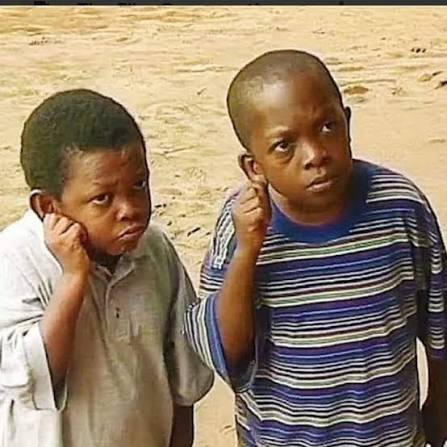


Ask any Nigerian film lover to name their favourite? Nollywood classic. They will rarely start by explaining the three-act structure or the final narrative resolution. Instead, they will describe a tense dinner table confrontation or a legendary insult delivered with precise comedic timing. This hyper-focus on specific moments is not a flaw in how we watch movies. It is the natural way the brain processes cinematic memory. We remember scenes because our minds are wired to retain high-stakes emotional peaks rather than long, linear plots. The scene has become the true currency of cinematic legacy.
This trend has grown rapidly with the rise of social media. Digital platforms have turned the standalone scene into the primary unit of online engagement. The entire legacy of classic Nollywood now lives on as digital stickers and reaction videos. Actors like Osita Iheme and Chinedu Ikedieze remain permanent fixtures of our daily vocabulary because Aki and Pawpaw have been rejuvenated as memes on Twitter. Their enduring fame does not depend on the complete narrative arcs of their old films. It rests entirely on isolated, comically chaotic moments. Similarly, Odunlade Adekola’s legendary facial expressions have become a distinct online language, showing that a single expressive beat can outlive a hundred full-length screenplays.
There is also a structural reason why scenes overshadow stories in Nollywood. Historically, many domestic screenplays have suffered from narrative bloat. A film might have a weak central plot, but it can still be saved by a few brilliant, high-energy sequences. Kemi Adetiba’s King of Boys is a prime example. The movie operates as a massive political thriller, but the average viewer’s memory instantly defaults to the opening scene with the lavish owambe birthday party. Sola Sobowale’s commanding entrance in her elaborate wardrobe anchors the entire emotional weight of the film. The plot that follows contains complex tangents, but that single, sharp introduction of Eniola Salami remains the defining memory of the movie.
This reliance on standout moments has influenced how modern filmmakers write their scripts. Many creators now consciously design scenes with clip-ability in mind. They build specific arguments and high-fashion aesthetics meant to go viral on TikTok or Instagram. This strategy can successfully drive opening-weekend ticket sales. However, it also creates a major creative trap. When a script is written simply to feed the algorithm with temporary highlights, the overall story becomes disjointed. Audiences are increasingly nostalgic for older films because they possessed a raw and unfiltered entertainment value that did not rely on polished, artificial viral baits. A great scene can convince someone to buy a cinema ticket, but only a cohesive, well-paced story can build a timeless classic.