
World Art Day celebrates the boundless power of creativity to challenge norms and shape our world, and in Nigeria’s vibrant scene, a new generation of visual artists is leading the charge. From Lagos studios buzzing with innovation to global galleries showcasing bold narratives, these creators are blending Afrofuturism, social commentary, and indigenous motifs to redefine contemporary art.
In this feature, we spotlight 8 trailblazing Nigerian visual artists whose works not only captivate but provoke, proving that Nigerian talent is reimagining the global canvas one stroke at a time.
1. Ken Nwadiogbu
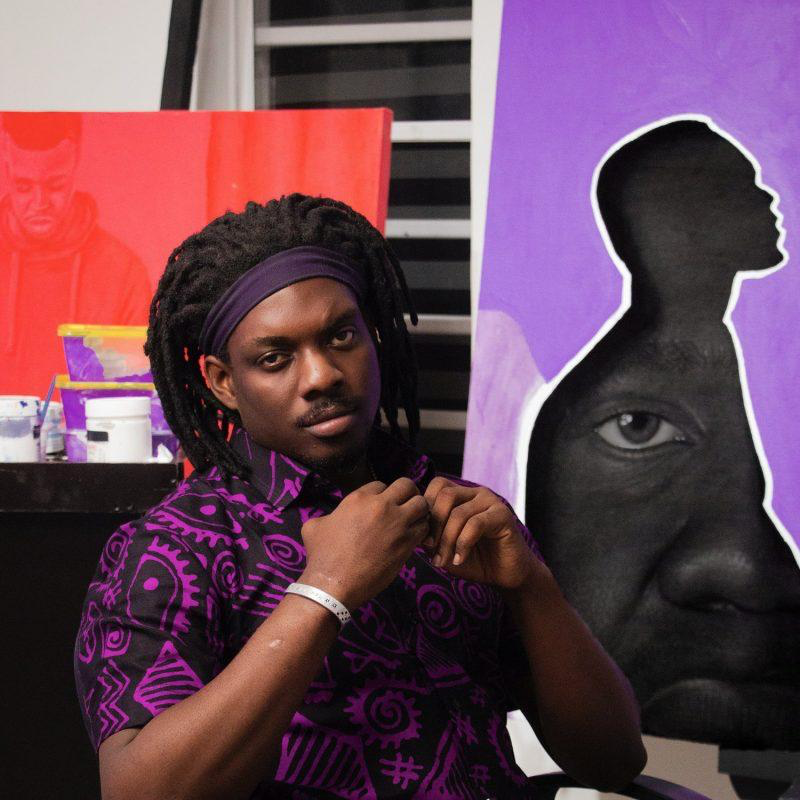
Ken Nwadiogbu is known for hyperrealistic drawings that blur the line between photography and graphite. His works often depict Black subjects wrapped in symbolic materials like plastic or rope, creating a tension between beauty and suffocation. Through his self-defined style, “Contemporealism,” he explores themes of migration, restriction, and identity in a globalized world, often using stark monochrome tones to heighten emotional intensity.
2. Ndidi Emefiele
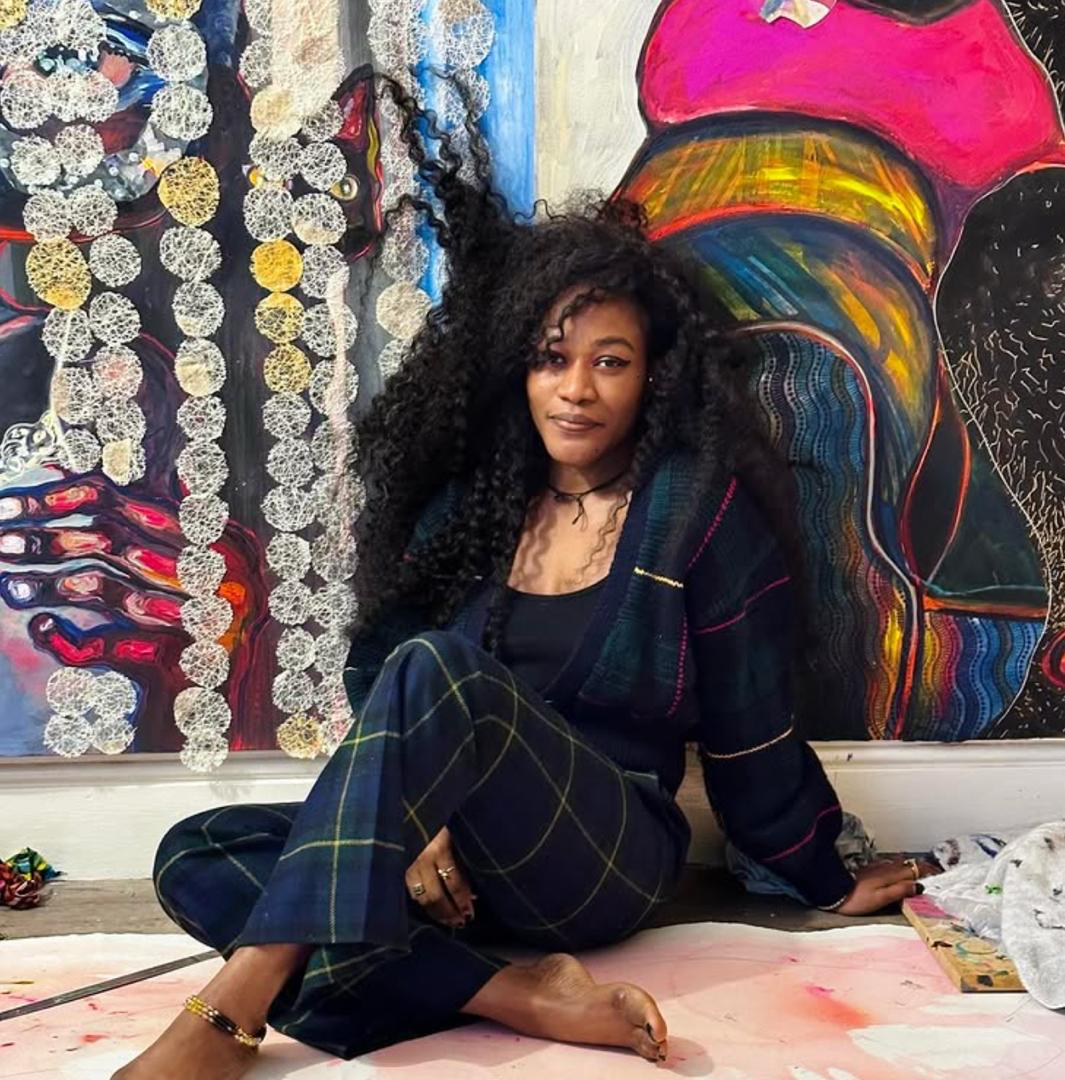
Ndidi Emefiele creates richly stylized portraits of African women, marked by elongated figures, vibrant patterns, and exaggerated features. Her paintings are filled with ornate headpieces, textured fabrics, and symbolic objects that reference both tradition and contemporary life. The women in her work often appear poised and commanding, occupying dreamlike spaces that celebrate femininity, resilience, and cultural pride.
3. Ayobola Kekere-Ekun
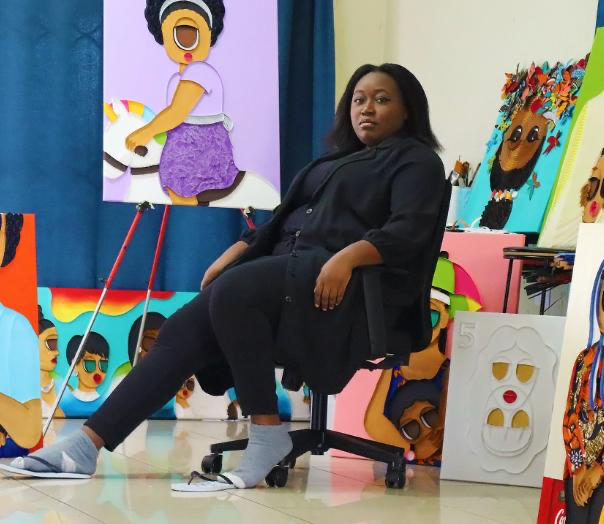
Ayobola Kekere-Ekun works primarily with paper quilling, a meticulous technique involving rolled strips of paper to build intricate, layered compositions. Her portraits are striking for their texture and depth, with each curl of paper contributing to lifelike skin tones and facial expressions. The works explore identity and perception, challenging viewers to reconsider the boundaries between craft and fine art.
4. Babajide Olatunji
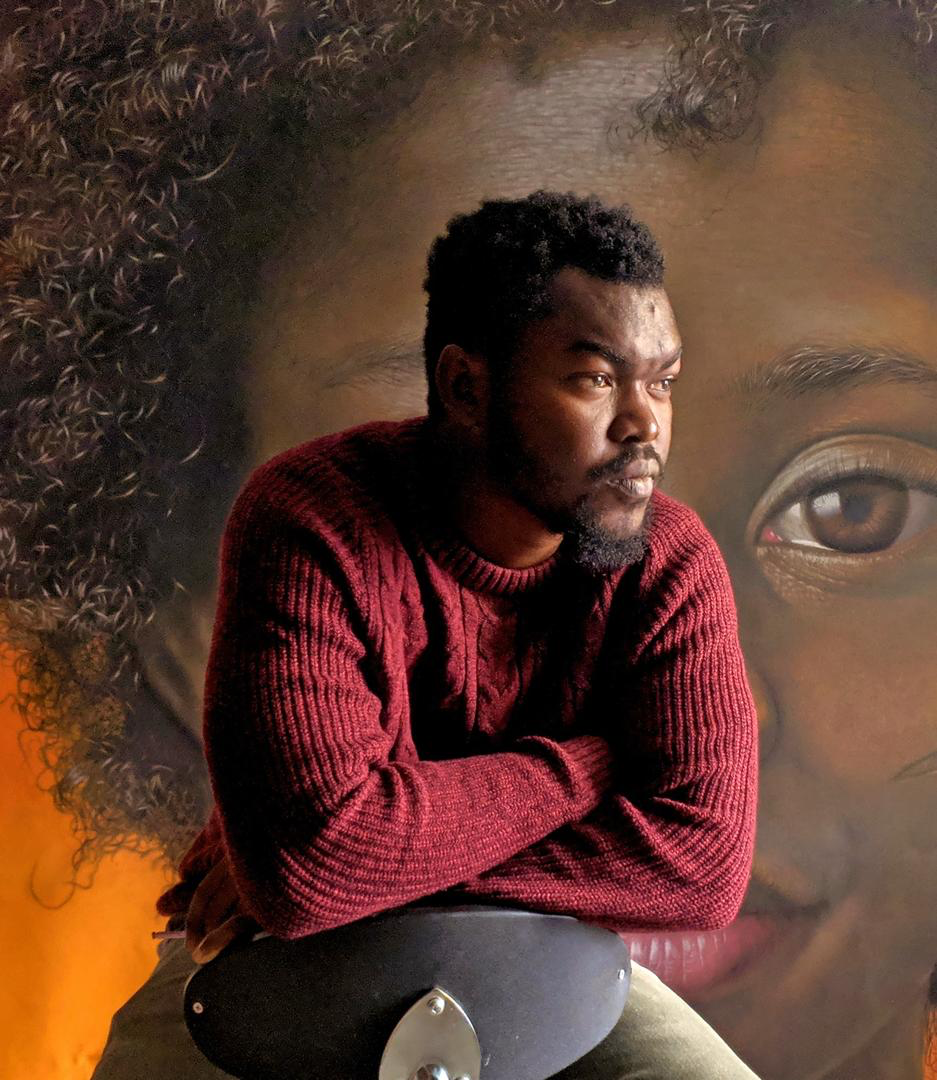
Babajide Olatunji produces hyperrealistic paintings that often feature Yoruba facial marks and traditional aesthetics. His subjects are rendered with extraordinary detail, capturing pores, scars, and textures that speak to lived experience. The works frequently juxtapose traditional identity markers with modern expressions, creating a layered visual dialogue between heritage and contemporary life.
5. Haneefah Adam
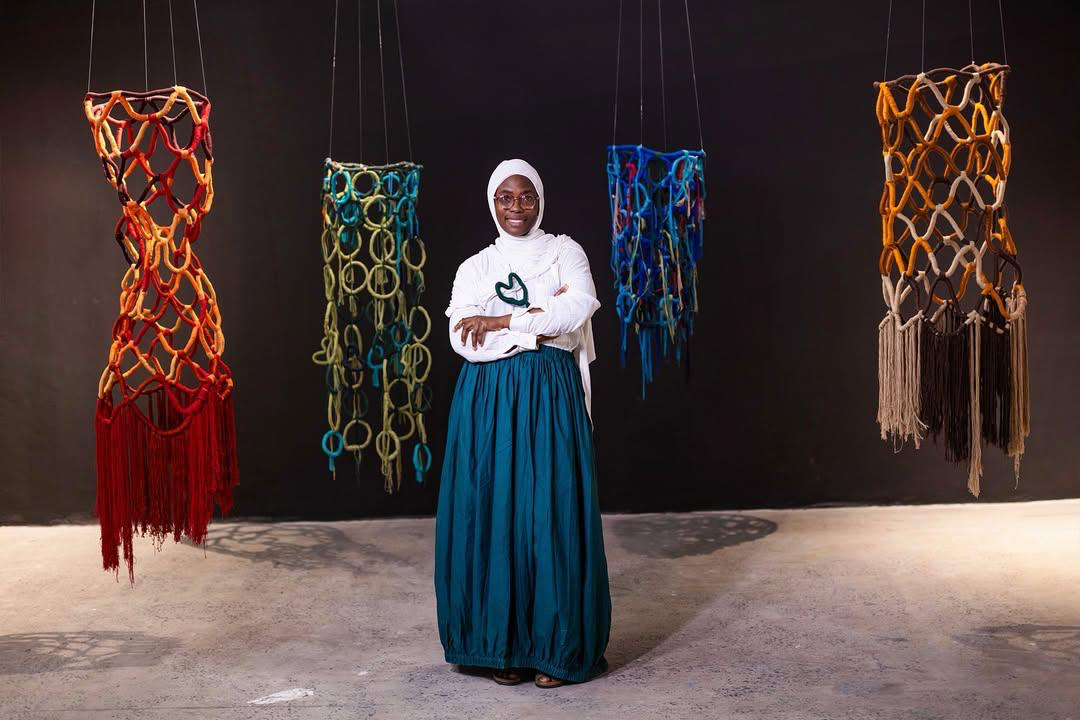
Haneefah Adam transforms everyday food items into carefully arranged compositions that resemble clothing, portraits, or cultural symbols. Using ingredients like rice, vegetables, and spices, she creates visual narratives that are both playful and deeply symbolic. Her work often reflects themes of faith, modesty, and identity, particularly through her well-known “Hijarbie” series.
6. Victor Ehikhamenor
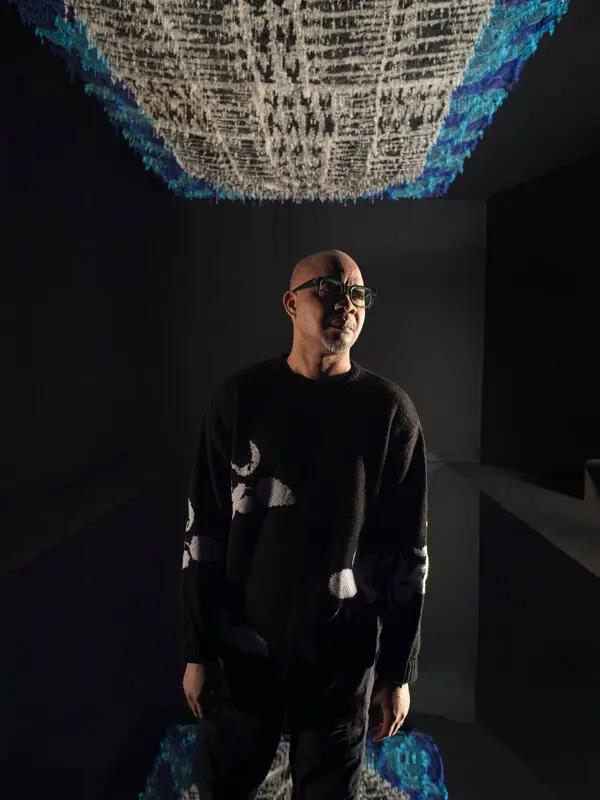
Victor Ehikhamenor’s work spans painting, installation, and writing, often drawing from traditional Edo motifs and spiritual iconography. His canvases are filled with repetitive patterns, symbols, and calligraphic forms that echo indigenous storytelling traditions. Through immersive installations and richly layered surfaces, he explores colonial histories, spirituality, and the continuity of African belief systems.
7. Njideka Akunyili Crosby
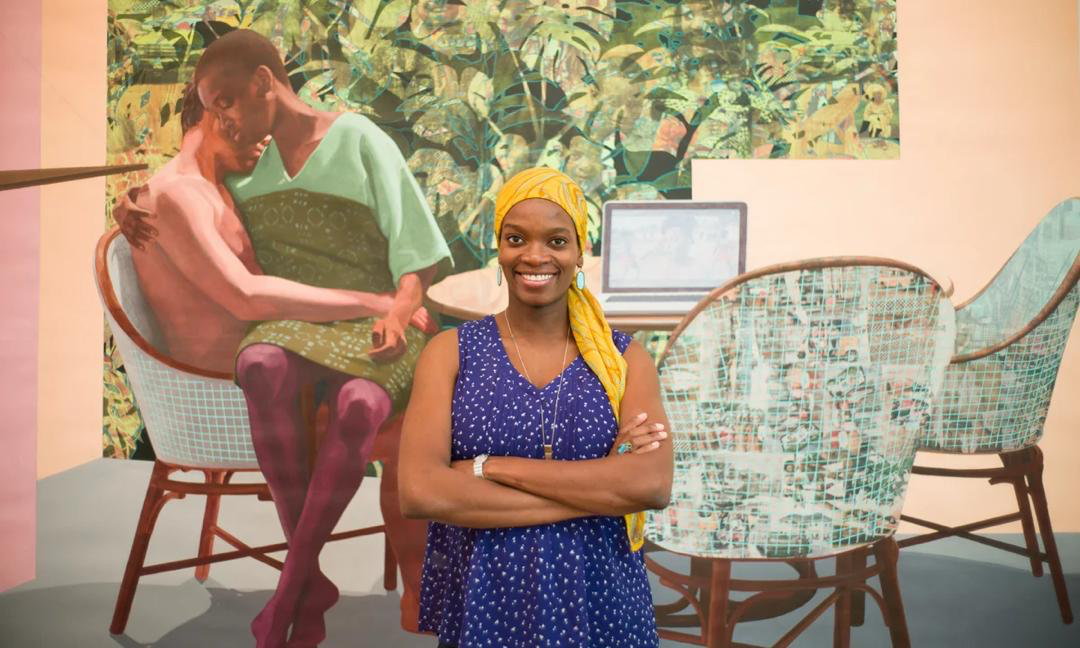
Njideka Akunyili Crosby creates large-scale figurative works that combine painting, drawing, and photo transfer techniques. Her scenes often depict intimate domestic interiors, where Nigerian cultural references blend seamlessly with Western elements. The layered compositions reflect diasporic experience, memory, and hybridity, with textures and imagery that reward close, prolonged viewing.
8. Ayanfe Olarinde
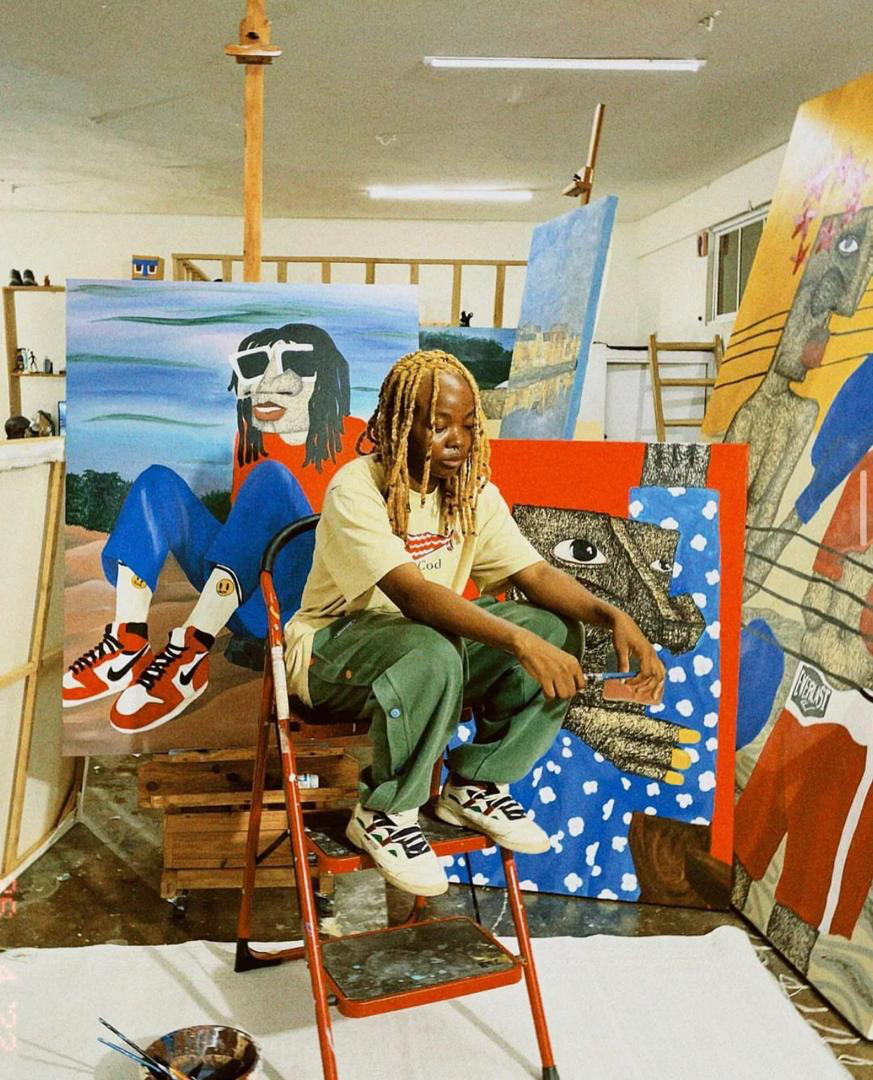
Ayanfe Olarinde is a Nigerian visual artist based in Lagos known for her distinctive “scribbling” technique, where dense, layered lines are built into expressive figurative and abstract compositions. Working across painting, drawing, and mixed media, she uses ink, acrylic, and found materials to create visually chaotic but intentional surfaces that gradually resolve into human forms and symbolic imagery.