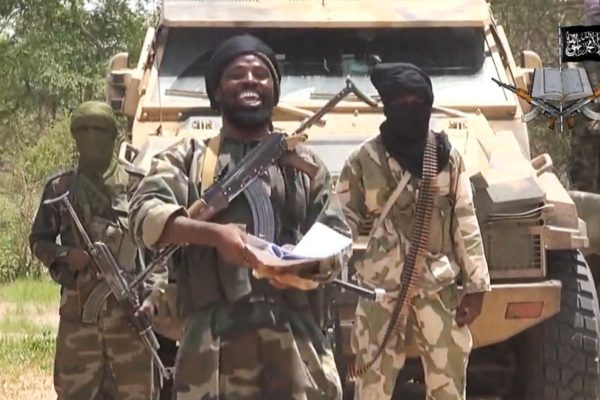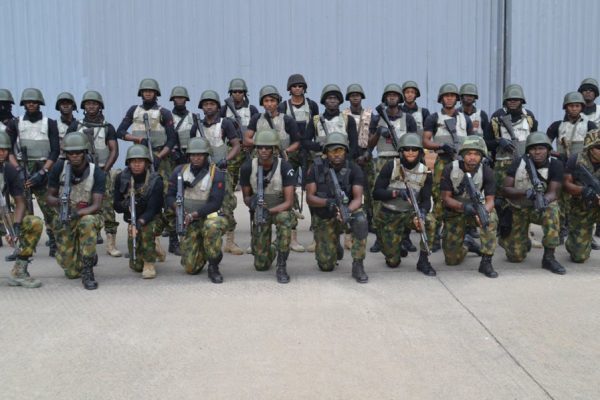


In the six weeks before the last General Elections, the Nigerian military delivered crushing defeats in battles against the Boko Haram terrorist group in the North-Eastern states of Borno, Adamawa and Yobe. In the process, Nigeria regained most of the territory that had been lost prior to the new offensive.
Even though many people claimed the renewed onslaught was a last-ditch attempt by former President Goodluck Jonathan to counter accusations that he was weak in the fight against the terrorists, such claims were rubbished by the fact that even after the elections which President Jonathan lost, the terrorists continued to sustain heavy losses in battles with Nigerian soldiers.
However, a lot of that momentum appears to have been reversed in the six weeks since President Muhammadu Buhari came into office, with no less than 23 attacks and 500 people killed by the bloodthirsty savages. These attacks have ranged from attacks on villagers in mosques, door-to-door searches for forced conscripts fleeing the group and being slaughtered and numerous suicide bombings, all with equal gruesomeness. In addition, last week saw a spate of suicide bombings seemingly coordinated in Potiskum, Jos, Kano and Zaria and a return to weekly church bombings, reminiscent of the very dark days of 2012 when this was became a weekly occurrence.
This reversal of fortunes for Nigeria and the military is rather ironic, considering that one of the major selling points of President Buhari’s campaign was his promise to roundly defeat the terrorists based on his experience not only as a former Head of State, but also as the military general who crushed the Chadian rebels that terrorized the North-East under President Shehu Shagari and then the Maitatsine riots as Head of State, in the same region most affected by the Boko Haram insurgency.
His policy pronouncement of moving the military command headquarters to Maiduguri in his Inauguration Speech was hailed by many defence analysts as necessary in bridging the distance between the theatre of war and the command structure of the military that churns out the strategies. However, the effect of that shift is yet to be felt.
What we have gotten instead is the confusion over the order of the President to remove non-essential roadblocks, rumours of clashes between the Office of the National Security Adviser and the Permanent Secretary over who oversees counter-terrorism operations, and the delay in changing his service chiefs which robbed the then incumbent ones of zeal to prosecute the war. In the midst of all this, Boko Haram has found opportunity to unleash a flurry of attacks with their cells in various cities being reactivated, a glaring failure of intelligence-gathering and analysis.
We believe that President Buhari is well aware of this, and the initial delay in naming his service chiefs ended on Monday when he released their names together with that of his National Security Adviser, and in an unprecedented move, directly naming the Chief of Military Intelligence, signalling the importance that the office will take on in the new phase of the war on terrorism.
The extremely positive response that has greeted the appointments means that the President got them right. There has nary been a negative comment on the naming of Major-General Babagana Monguno (rtd) as the new NSA or that of Major-Generals Gabriel Olonishakin and Tukur Buratai as Chiefs of Defence and Army Staff respectively, or of AVM Sadique Abubakar and Rear Admiral Ibok-Ete Ekwe Ibas as Air and Naval Chiefs respectively.
This gives them a lot of goodwill and leverage to inspire the officers and men of the Nigerian military and tweak the strategy in places where it is not working to ensure that the total defeat of Boko Haram comes sooner than later.
The war should also focus on the right parameters of success – rather than just the killing or capture of foot soldiers, the military needs to go after the leadership of the terrorist group. It was a similar strategy pursued by the United States, killing 18 of the leaders of al-Qaeda in five years that has reduced the effectiveness of the terrorist organisation that Boko Haram initially drew inspiration from.
It also needs to focus on smashing terrorist cells, both active and dormant, and nip their attacks in the bud before lives are lost rather than just apprehending culprits after the fact.
We will continue to solidly stand behind President Buhari and the Nigerian military and we believe that victory for Nigeria will be achieved sooner than later.