
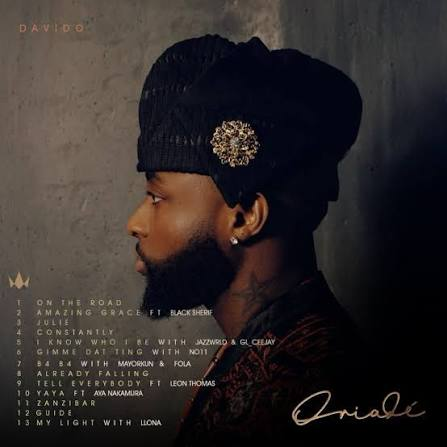

Fifteen years after bursting onto the African music scene, Davido returned this week with Oriadé, an album that immediately dominated headlines and reignited conversations about his place in Afrobeats history. Commercial success is no longer the question. Davido has sold out arenas, amassed billions of streams and become one of the defining architects of Afrobeats’ global rise. The more compelling question is whether Oriadé changes the story of his career or simply reinforces what has already made him one of Nigeria’s biggest musical exports.
Legacy albums are judged differently from breakout albums. Early in an artist’s career, audiences listen for potential. Years later, they listen for evolution. The challenge is no longer proving that you can make hits; it is proving that you can still surprise listeners without abandoning the qualities that made them stay. Every veteran eventually reaches the point where maintaining relevance becomes less about consistency and more about reinvention. That challenge has become even sharper in Afrobeats. The genre now moves at a pace few artists can comfortably match, with younger musicians, producers and internet-driven trends constantly reshaping its sound. The pioneers who helped take Afrobeats global are no longer competing only with one another; they are competing with the next generation’s ability to redefine what Afrobeats sounds like. Longevity now demands more than chart success. It demands artistic evolution.
Oriadé arrives fully aware of that reality, but it responds with caution rather than disruption. Across its 13 tracks, Davido leans into the formula that has sustained his career: polished production, infectious melodies and carefully chosen collaborations. The appearances of Aya Nakamura, Leon Thomas, Black Sherif, Mayorkun and Llona broaden the album’s appeal without pulling it too far from Davido’s established sound. Rather than presenting a radically different version of himself, he offers a more refined one. It is an album built on confidence, not experimentation. That decision makes sense. Reinvention is often celebrated in hindsight but can alienate the very audience that helped build an artist’s career. Davido appears less interested in shocking listeners than in reminding them why his sound became indispensable in the first place. In that sense, Oriadé is not a rejection of his musical identity but a reaffirmation of it.
The question is whether reaffirmation is enough to redefine a legacy. The answer, at least for now, is probably no. Oriadé does not feel like the kind of record that redraws the boundaries of Davido’s artistry in the way landmark albums often do. It introduces no dramatic sonic shift, no bold thematic departure and no creative risk substantial enough to alter how his career will ultimately be remembered. Instead, it doubles down on the qualities that have always defined him: accessibility, consistency and an instinct for making records that connect across borders.
That should not be mistaken for failure. There is value in mastering a sound rather than constantly abandoning it. Some artists build their legacy by reinventing themselves every few years. Others build theirs by perfecting a formula that remains culturally relevant across decades. Davido has increasingly positioned himself in the second category, and Oriadé reinforces that identity with remarkable confidence. Perhaps that is the album’s real achievement. It recognises that longevity is not always measured by dramatic transformation. Sometimes it is measured by the ability to remain essential without losing sight of who you have always been.
So, can Oriadé redefine Davido’s legacy? Not yet. What it does instead is strengthen the legacy he has already built. It extends an extraordinary fifteen-year run, proves that his hit-making instincts remain intact and reminds listeners why he continues to occupy the upper tier of Afrobeats. Reinvention may still come later in Davido’s career. But Oriadé is less interested in becoming a new chapter than in making the current one impossible to ignore.