
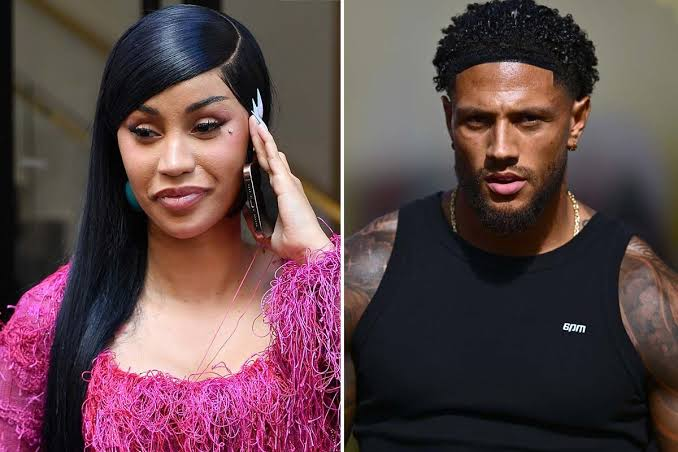


An elite athlete’s contract value relies on performance, but their long-term commercial power depends on cultural relevance. For years, Maduka Okoye built his public profile through Serie A clean sheets and Super Eagles call-ups. That athletic identity operates on a strict, perishable schedule bounded by weekly match results. His front-row appearance alongside Cardi B at Paris Fashion Week shattered those limits, moving his brand into a far more lucrative domain.
When Okoye guided Cardi B to her seat at the Jean Paul Gaultier show and later joined her in Venice, the transition was strategic rather than accidental. European high fashion has become a major battleground for athlete monetisation. Proximity to an international music icon instantly re-indexed Okoye from a regional sports figure into an elite lifestyle asset. Gossip outlets focused on romantic speculation, but brand managers saw something far more valuable: a seamless pivot into luxury endorsement channels that survive long after a player retires.
Cardi B accelerated this repositioning when she addressed the surrounding media frenzy on her Instagram stories. Complaining about paparazzi scrutiny while drawing parallels to Britney Spears locked Okoye into an international media cycle that sports highlights cannot purchase. That momentum coincided with ongoing public commentary from his former partner, generating search metrics and digital interest that dwarfed standard football reporting.
This crossover provides a clear blueprint for African sports management. Athletic skill secures a club contract, but strategic placement in global fashion spaces builds permanent personal equity. Cardi B did not just share a frame with Okoye during their joint appearance at Paris Fashion Week. She unlocked access to an audience that evaluates athletes on style, presence, and cultural influence rather than pitch statistics.