Nigeria’s creator economy is no longer just about exporting Afrobeats to global platforms. It has become a primary target for domestic media manipulation. Political media management on our timeline has shifted toward a completely new playbook, moving far away from the usual public debates over state policy. Political influencers are now using a coordinated push to get our biggest celebrities to stay quiet about the security crisis. Anonymous interest groups have realized something crucial. Manufacturing silence is far cheaper than paying for an outright political endorsement that nobody will believe anyway.
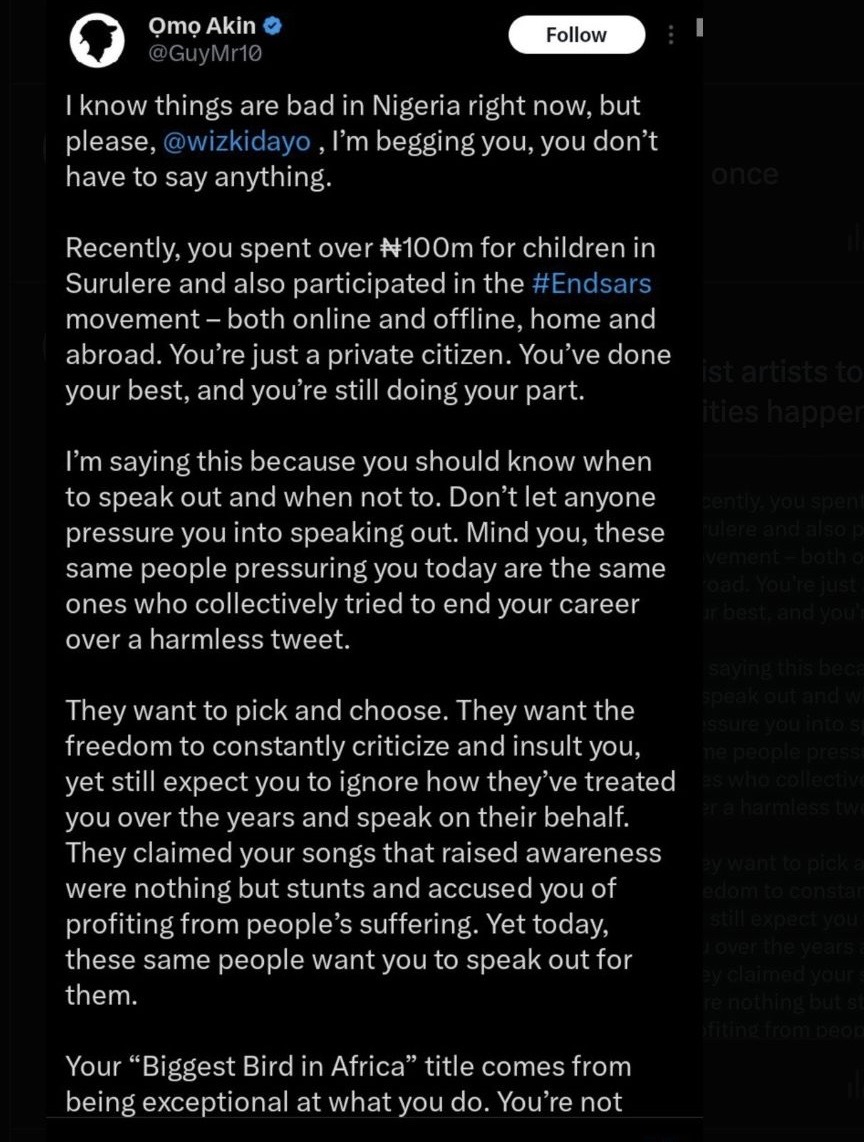
We saw the template clearly over the past few days when the exact same script dropped in the comment sections of our biggest music exports. One handle, Omo Akin, begged Wizkid to ignore the public pressure to speak out. The post pointed to his Surulere donation and past EndSARS participation to argue that he is a private citizen who owes nobody anything. Hours later, the exact same text hit Burna Boy’s mentions. The influencer literally just changed the artist’s name and swapped the charity reference to match his prison inmate releases. The remaining paragraphs matched word-for-word, revealing a single brief masquerading as organic fan concern.
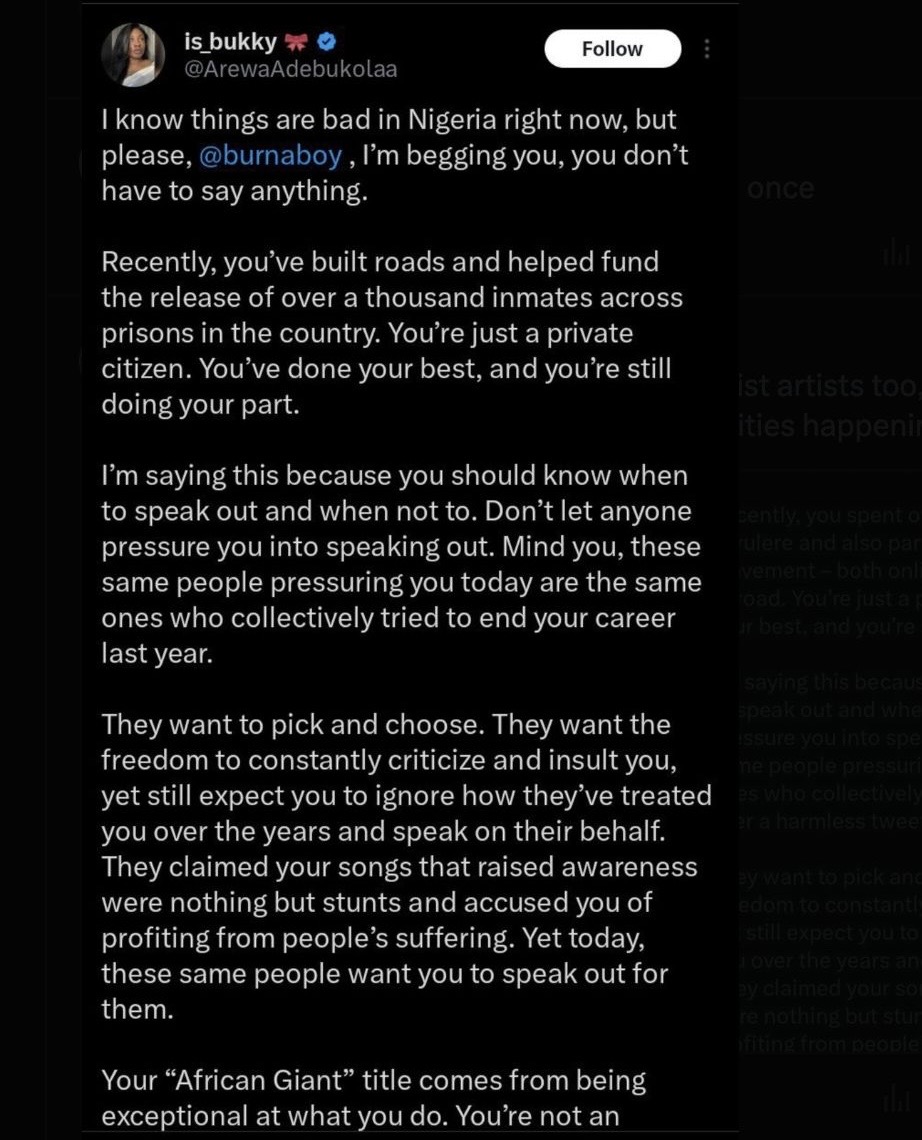
This strategy is all about narrative containment. A single tweet about national security from an artist with millions of global followers instantly brings international media attention, and certain entities cannot handle that level of amplified scrutiny. PR handlers know they cannot easily get global superstars to endorse difficult situations, so they deploy these scripts instead. It weaponizes timeline friction by posing as loyal fans protecting their idols from a hypocritical public. This creates a convenient shield for the artists, giving them a perfect excuse to protect their international corporate brands by remaining silent. It shows exactly how influencers are shaping pop culture and public discourse from the shadows.
The strategy tries to shift the burden of accountability entirely away from public officials. It turns a serious national issue into a shallow argument between demanding fans and defensive celebrities. When real-world tragedies get pushed aside by organized digital campaigns, our attention currency stops being a tool for public awareness. It changes into a mechanism for narrative control, making sure online spaces remain fragmented.
This focus on manufactured silence shows how digital spaces are being managed to protect specific interests. By using copy-and-paste scripts to keep cultural icons quiet, these anonymous handlers want to ensure the timeline never unites around critical national issues. The strategy relies on keeping the conversation divided, turning the digital social influencer ecosystem into a tool that keeps the public disconnected from what is happening on the ground. Someone is paying influencers to plead with music artists not to speak on Nigerian issues. The question remains: who is signing the checks?