

by Alexander O. Onukwue
A bicameral legislature, we are told, is supposed to provide for the balancing of the legislative process between two houses of parliament, such that one does not hold the exclusive power that cannot be checked.
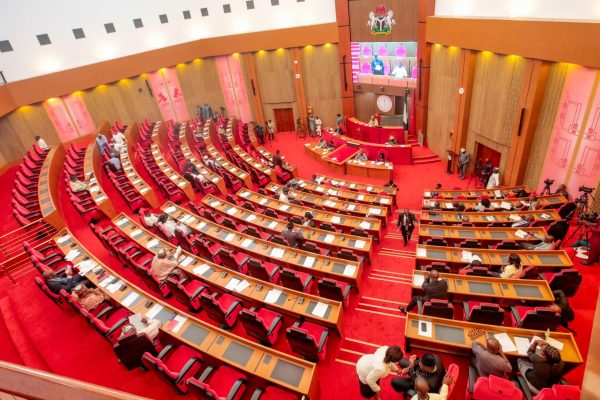
Nigerians have not always seen the benefit of this innovation. Both houses of the National Assembly employ over 450 representatives whose budget takes up useful money that can be used to fix tertiary education and healthcare. The National Assembly often resembles a guest house with two parlours, in a compound where people sleep on mats.
But maybe for the first time since they were instituted, it is about time one actually performed that function of putting a leash on the other. At this point in time, when the Senate appears to want to be co-Executives (according to Itse Sagay) with the Presidency, Nigeria’s House of Representatives will face a moment of decision.
To be sure, the lower house has not had the best reputation, neither has it been without its controversies. Two of the last four Speakers have been impeached, one Speaker defected to another party from the ruling party, while the incumbent, Yakubu Dogara, managed to smile his way out of impeachment on allegations of Budget padding in 2016. On the face of these, there may not be the morale for the Green Chamber to make a stand against the Senate.
They do not have as much Constitutional power as the Senators but the House under the leadership of Dogara has had less internal rancour and abrasion with the Executive, than the Senate has, and while he appears to be in no-qualms-terms with the Senate President, it will not be against the interest of Nigerians for his House to raise eyebrows on the recent happenings in the upper chamber, especially the flash motion that nearly made Saraki the Acting President.