
The Nigerian social media space was thrown into a mix of excitement, embarrassment, and confusion following the visit of American streamer iShowSpeed. The 21-year-old content creator, who embarked on a 28-day tour of Africa starting December 29, 2025, with Angola as his first stop, arrived in Nigeria on January 21, 2026.
His time in Lagos included celebrating his birthday and breaking a major career milestone, becoming the first Black creator to reach 50 million subscribers on YouTube. Yet, instead of universal celebration, his visit triggered a national conversation about Lagos, tourism, and how Nigeria presents itself to the world.
The Debate Before He Even Landed
Days before iShowSpeed’s arrival, Nigerian social media users were already divided. Many questioned why Lagos was chosen as his primary destination, arguing that other states would offer deeper insight into Nigeria’s history, culture, and heritage. Critics feared that Lagos would only showcase nightlife culture, heavily shaped by Detty December, rather than the broader Nigerian story.
Others countered that Lagos is Nigeria’s most recognizable city internationally and that its chaos, nightlife, and energy are exactly what make it appealing to global audiences. This divide set the tone for how his visit would later be judged.
From Excitement to Discomfort
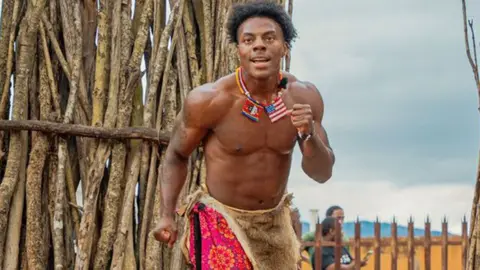
iShowSpeed was welcomed with a traditional Yoruba reception, which initially sparked excitement among viewers. However, as his live streams continued, enthusiasm quickly gave way to concern. Millions watching online observed constant obstruction from onlookers and self-described street thugs (egbon adugbo), making movement difficult and often chaotic.
The locations visited also became a point of contention. His Lagos itinerary included fashion stores, meetings with local streamers, Afrobeat dance lessons, a skate club visit, and a birthday celebration. While these activities reflected contemporary youth culture, many viewers felt they failed to present Nigeria’s historical depth or cultural richness.
For some, the experience felt underwhelming compared to his time in other African countries. For others, it perfectly represented Lagos as it is, unpredictable, crowded, and intense.
Chaos as a Feature, Not a Bug
A central argument that emerged was whether Lagos’ disorder was a failure of planning or the very thing that attracted iShowSpeed in the first place. Lagos is not marketed as a quiet cultural retreat. Its global reputation rests on energy, nightlife, and spectacle.
Some users argued that iShowSpeed likely requested Lagos for these reasons, especially given his content style, which thrives on unpredictability and high-energy environments. Others insisted that better crowd control and structured planning could have preserved Lagos’ vibrancy without allowing it to spiral into disorder.
The Begging Culture Conversation
Another uncomfortable but important discussion sparked by the visit was the visibility of begging culture during the live streams. Viewers questioned whether this phenomenon was uniquely Lagos-based or reflective of broader national economic struggles.
The conversation quickly expanded into Nigeria’s rising poverty levels and whether live streaming these moments was exploitative or necessary. Some argued it painted Nigeria in a negative light, while others felt it was an honest depiction that forced both citizens and government officials to confront economic realities.
The Deleted Post and Online Speculation
Following his milestone achievement, iShowSpeed shared a post on X announcing his record-breaking subscriber count, which he later deleted. While no official explanation was given, speculation linked the deletion to a controversial moment involving Nigerian streamer Peller, who appeared to be denied access to iShowSpeed during a live stream.
Despite the deletion, a photo of iShowSpeed with his birthday cake in Nigeria remains on his X account, serving as a quieter but lasting marker of his time in the country.
What We Think
iShowSpeed’s brief stay in Nigeria did more than entertain. It reopened long-standing conversations about tourism, cultural representation, and economic realities. His Lagos experience exposed both the city’s magnetic energy and its structural challenges.
Whether Lagos underwhelmed him or delivered exactly what he expected depends on perspective. What is clear is that Nigeria’s tourism narrative cannot rely solely on nightlife and chaos. If the country hopes to attract sustained global interest, historical preservation, structured cultural experiences, and intentional storytelling must stand alongside the raw energy Lagos is known for.
Lagos may be the loudest introduction, but it should not be the only one.