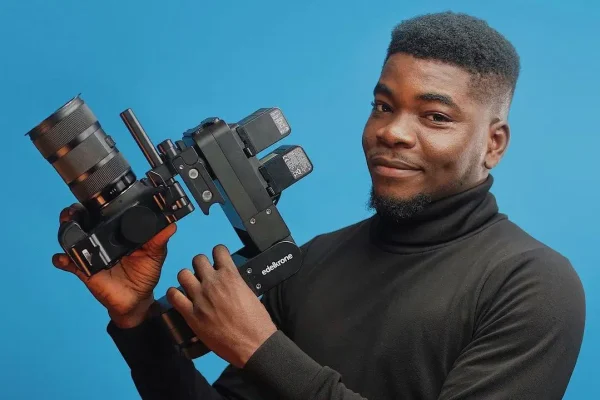



Adeola Ayoola, the founder of Famasi, provided a detailed look into her personal life, the origins of her company, and the challenges of the Nigerian healthcare system during her interview.
Personal Background and Interests
● Question 1: Who is Adeola in a quiet moment and what are the everyday things she enjoys?
● Answer: I would say that I am almost always working. I have spent the past five years fully dedicated to building my business. In my quiet moments, I enjoy playing tennis in the mornings and going on long walks. At my core, I am constantly thinking about money and business.
Origin of the Name “Famasi”
● Question 2: How did the name “Famasi” come about?
● Answer: Our goal is simplifying access to medications, so when looking for a name with my co-founder, we wanted something that was also simple and rolled off the tongue easily, so, Famasi.
Identifying the Problem in Healthcare
● Question 3: What was the specific problem that made you realize the health system needed fixing?
● Answer: While working at the HIV/AIDS clinic at the National Hospital Abuja, I saw hundreds of patients queuing daily for routine antiretroviral medications. One moment that stayed with me was seeing a young boy with a kidney disorder who struggled to walk but still had to come in physically for a prescription he had been taking for years. That experience, along with what I observed during COVID-19 inspired me to build a service that delivers medication directly to people with recurrent medication needs, starting with ourselves and loved ones. We put out a tweet on X to see if other people would value it & we had hundreds of people saying “sign me up and so, we decided to solve for them too.
Underestimated Aspects of Nigerian Pharmacy
● Question 4: What is one thing about pharmaceutical supplies in Nigeria that most people underestimate?
● Answer: I think people underestimate how much the average Nigerian depends on pharmacies for primary care. About 80% of people visit a pharmacy first before a hospital because pharmacies are often closer, less expensive, and don’t require long queues. Most conversations about pharmacies are short-sighted to just the buying and selling of medications, and not the access to primary health care they provide. With more
support and intention behind pharmacies, I believe the hospitals will be less overworked as the pharmacies will be able to provide basic healthcare.
Reality Checks and Business Challenges
● Question 5: What was something you thought would be straightforward but turned out to be difficult?
● Answer: I initially thought people would be more proactive about their health, but I quickly realized that people wait until things become critical before seeking healthcare. Logistics was also a major challenge. Delivering medications from Lagos to Abuja could take up to 72 hours because of bad roads, rain, and police stops. Coupled with last minute requests, this was a challenge that forced us to rethink our model to ensure patients can get same-day delivery.
Building Trust and Infrastructure
● Question 6: How have you managed to get traditional pharmacy operators comfortable using your service?
● Answer: We managed to get traditional pharmacy operators comfortable using our service by first deeply understanding their needs. My co-founder and I spent months traveling across Southwest Nigeria, sitting with pharmacy owners to understand what was important to them, listening to their pain points, and discussing how we could support their businesses. That trust-building shaped how Famasi evolved into an infrastructure provider for pharmacies, with a digital platform that helps them manage inventory, payments, and sales while connecting them to doctors and patients who need medications.
Advice to Her Younger Self
● Question 7: What would you say to your younger self before starting this journey?
● Answer: I would say “run” and that is because the work is incredibly hard and filled with “no’s”. However, I would ultimately tell myself to do it because the world needs the solution. The fulfillment from helping people manage chronic illnesses and having customers reach out to pray for me makes the job worthwhile.
Future Plans for Famasi

● Question 8: What is next for Famasi?
● Answer: Famasi is currently rolling out AI agents for pharmacies. These agents are designed to handle operational tasks, such as determining what medications to buy from suppliers and finding the best prices, freeing up pharmacists to focus more on patient care.