
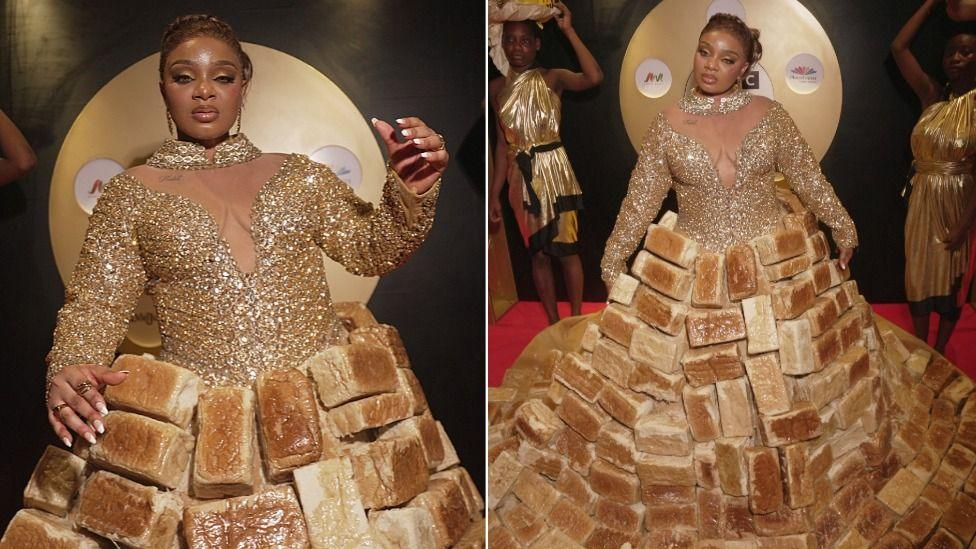


Queen Mercy Atang walked into the Eko Hotel convention centre on May 9 wearing a gold gown shaped like a bread pyramid. She carried a literal pot of beans as an accessory. Eniola Ajao arrived in a yellow dress constructed entirely from inflated balloons. A few feet away, actors like Osas Ighodaro and Mercy Eke stood in meticulously structured couture. The 12th Africa Magic Viewers’ Choice Awards red carpet split into two fiercely opposed realities on Saturday night.
This visual divide reveals exactly what Nollywood thinks of itself right now. The AMVCA red carpet operates as a physical proxy for the Nigerian entertainment business model. The industry is currently trapped in a silent war. Creators trying to build premium exportable art are fighting against influencers engineering cheap stunts to manipulate the local internet algorithm.
For many stars, commanding attention comes at a massive financial cost. Celebrities spend millions of naira on custom looks to secure a few seconds of camera time outside the venue. The stakes remain incredibly high because the AMVCA provides the only unified platform capable of broadcasting a single cultural moment across the entire continent. You either dominate the night or you become invisible.
The traditionalists treat the evening with the reverence of a global film premiere. Stars like Ighodaro and Linda Ejiofor wore sophisticated styling that communicates permanence. Eke stepped out in a sculptural gown featuring metallic finishes that required hundreds of hours of manual construction. Their aesthetic choices signal a readiness for massive cinematic projectsand global distribution deals. They dress for international buyers and legacy studios. They want the Nigerian film sector to be taken seriously as a global heavyweight.
The viral faction abandons craftsmanship for sheer shock value. Ajao’s balloon dress and Atang’s bread pyramid were created by the exact same designer. The brand specializes in pushing boundaries until they snap. The intention is never to create something beautiful. The goal is to create something completely unavoidable. When an actor wears an unavoidable outfit, they hack the media cycle. The award bodies validate the technical skills of the actors inside the hall. The red carpet stunts ensure those same actors dominate the social media trending tables regardless of who actually wins a trophy.
The male celebrities historically played it safe in black tuxedos. This year proved the chaos is spreading across gender lines. Stan Nze’s beaded jacket and puff skirt attempted to merge traditional Igbo Odogwu fashion with avant-garde silhouettes. The proportions failed to flatter him, yet the photos circulated everywhere. Saga Deolu appeared in a Dracula-inspired cape. The men realized that quietly looking handsome no longer translates to digital leverage. They are joining the aggressive arms race for engagement.
A ridiculous outfit reliably generates ten times more digital conversation than a perfectly tailored suit. Designers producing these chaotic garments understand the mechanics of the attention economy perfectly. They monetize outrage because they know a controversial dress will land their client on every major blog by midnight. This approach mirrors the broaderNigerian creator economy where deliberate provocation serves as the fastest route to a lucrative brand endorsement.
We are watching a clash between two incompatible visions for the future of African storytelling. The premium tier wants to compete with Cannes and the Oscars. The viral tier wants to compete with TikTok and Instagram Live. You cannot merge these two ambitions on the same red carpet without looking deeply confused. A European executive evaluating the African film market sees the same viral images the local audience sees. The industry cannot easily claim prestige status when its most photographed moments feature baked goods.
The 12th AMVCA handed out its trophies to the filmmakers who spent years developing their craft. The digital conversation stayed stubbornly fixed on the fashion misfires. The industry will eventually have to reconcile this split personality. A film ecosystem cannot indefinitely sustain itself on internet outrage before the global audience stops taking the actual movies seriously.