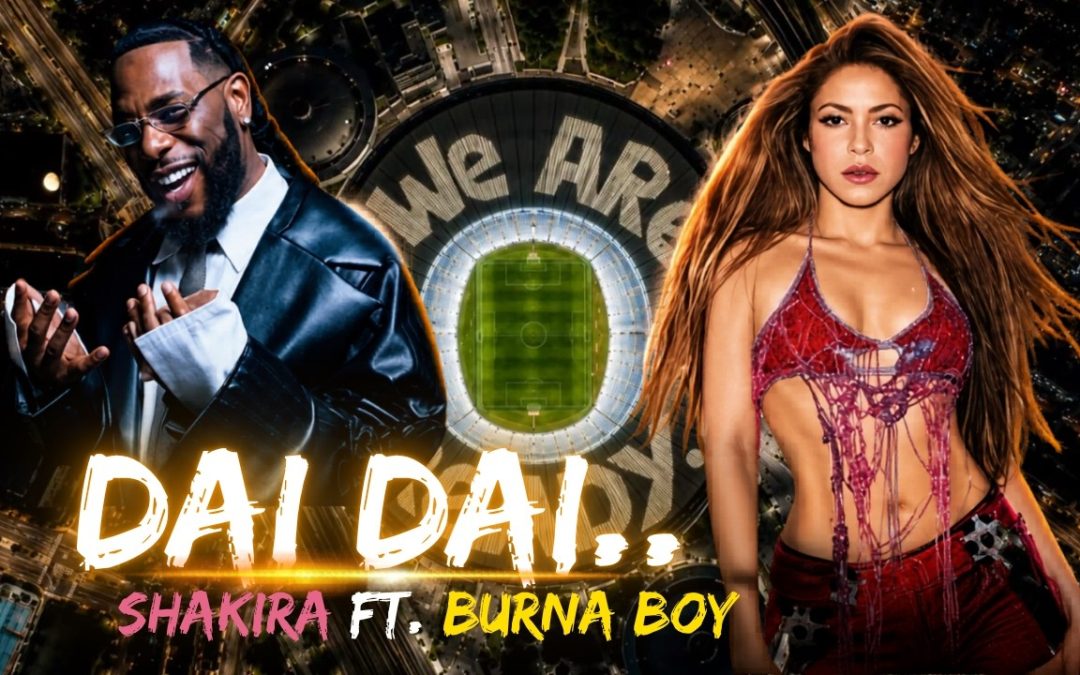


What began as a genre with a niche international audience has grown into one of the world’s most influential sounds. And now, with Burna Boy joining Shakira on the 2026 FIFA World Cup anthem “Dai Dai,” Afrobeats may be stepping into one of its biggest moments yet.
The comparisons have already started. Can “Dai Dai” become this generation’s “Waka Waka”? And honestly, we think that it just might.
“Waka Waka” Set the Standard and Shakira Knows It
Back in 2010, Shakira’s “Waka Waka (This Time for Africa)” became more than a football anthem. It became a cultural moment. The song dominated radio, stadiums, dance floors, and international charts. Sixteen years later, people still associate it with the energy and unity of the World Cup.
That history matters. So when teasers dropped announcing Shakira’s return to the World Cup stage, this time alongside Burna Boy, excitement came naturally. The formula already has nostalgia and global appeal, and now Afrobeats is attached to it.
Burna Boy Is Exactly the Artist This Moment Requires
There are few Nigerian artists better positioned for a global football anthem than Burna Boy. Over the last few years, he has become one of the most recognisable African artists in the world. Grammy wins, stadium tours, international collaborations, and a steadily expanding fan base have made him one of the defining faces of Afrobeats globally.
More importantly, his sound translates. Burna Boy’s music already carries themes of identity, celebration, rhythm, and all things that naturally fit the spirit of the World Cup. Pairing that with Shakira’s global reach feels less like an experiment and more like an inevitability.
The precedent set leaves you wondering whether a Nigerian song could become a revolutionary hit track, as “Waka Waka” did. Burna Boy’s status as one of the best-known Afrobeats artists makes him a great choice for a World Cup song that represents global unity. In addition to this, Shakira’s track record of creating ‘Waka Waka,’ and the excitement around her return to making the official World Cup song 16 years after her last song for the tournament will create a huge boost of excitement for the track.
Afrobeats Is No Longer the Guest. It Is Part of the Main Stage
What makes this moment bigger than just one song is what it represents for Afrobeats as a genre. For years, Afrobeats existed on the edges of global pop culture. Now it is becoming central to it. From international award shows to festival headlines and now potentially the biggest sporting event in the world, the genre’s visibility has exploded.
And moments like this matter because a World Cup anthem reaches audiences who may never actively seek out African music. It introduces Afrobeats to entirely new listeners in regions where the genre is still growing. That kind of exposure creates ripple effects.
The “Dai Dai” Effect Could Go Beyond Burna Boy
If “Dai Dai” becomes the global hit that we expect, Burna Boy will not be the only beneficiary. Curious listeners will inevitably explore more Afrobeats music. That means more streams for Nigerian artists, more international interest, and more opportunities for the genre as a whole.
This is how global expansion works. One breakout cultural moment opens the door wider for everyone else. Afrobeats has already been moving toward world domination for years. A successful World Cup anthem could push that movement even further.
The interest in Burna Boy’s music outside of ‘Dai Dai’ will also benefit other Afrobeat artists whose discographies will be perused in search of Afrobeat music. The song’s success has the potential necessary for the global takeover that Afrobeat is currently on.
What do we think?
Shakira’s star power and global reach, coupled with Burna Boy’s status as one of the Afrobeat powerhouses, is exactly what the World Cup soundtrack needs for a successful debut. All that’s left is for both artists to give the world a song they won’t forget easily, and from the teaser dropped a few days ago, we might be getting exactly that.