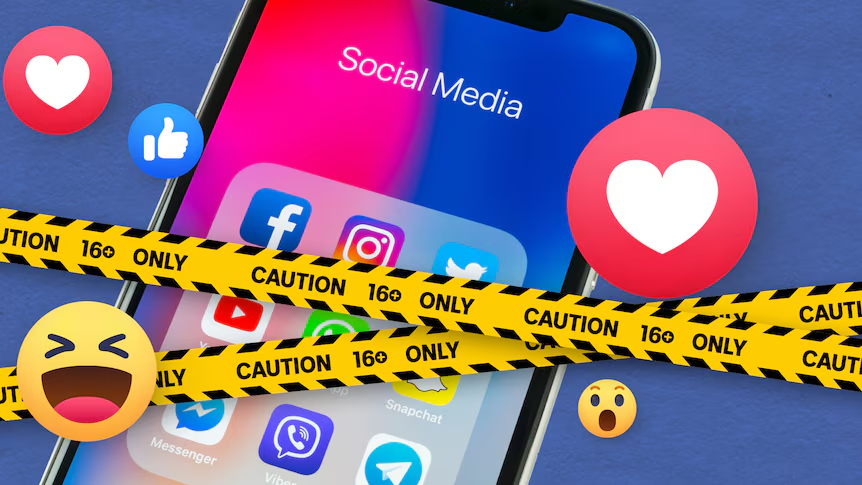


In recent years, more countries have begun to reconsider how much access children and teenagers should have to social media. In 2025, Australia became the first country to enforce a nationwide ban on social media use by youths under 16, restricting access to platforms such as TikTok, Instagram, Facebook, YouTube, and X.
The decision sparked widespread backlash, but it also reignited global conversations around the psychological, social, and cultural effects of social media on minors. Countries like France and the United Kingdom have since begun considering similar legislation, with France proposing restrictions for children under 15, championed by its president as a protective measure rather than a punishment.
These developments raise an important question closer to home: could something similar ever work in Nigeria?
As digital creation continues to flourish as a legitimate industry in Nigeria, more young people are growing up online. Children and teenagers are no longer just consumers of content; they are creators, influencers, and in some cases, breadwinners. While talent and creativity should always be encouraged, the growing fixation on social media at such formative ages has sparked concern about its long-term effects.
One platform that has drawn particular criticism in Nigeria is X, formerly known as Twitter. Since the introduction of monetisation and creator incentives, there has been a noticeable rise in minors participating in online harassment, digital pile-ons, and cyberbullying, often behind anonymous accounts with surprisingly large followings. The lack of age verification and accountability has made it easier for young users to engage in digital violence without fully understanding its consequences.
Beyond harassment, psychologists and educators have raised concerns about the dependency social media creates. Many children and teenagers now rely on online engagement for dopamine and excitement, replacing what was once considered normal childhood fun: outdoor play, imagination, and offline social interaction. This shift has been especially visible among Gen Alpha, while Gen Z largely experienced a more balanced pre-teen upbringing before becoming fully immersed online in their late teenage years.
The reasons for this growing dependence are layered. In some cases, it stems from reduced parental presence due to demanding work schedules. In others, it is influenced by digital creators who document their lives, and sometimes their children’s lives, online, unintentionally normalising constant visibility. For Nigerian teenagers in particular, platforms like TikTok and YouTube serve as primary sources of influence, with creators such as Purple Speedy shaping trends, humour, and aspirations.
The rise of child-friendly content creators has made social media even more appealing to young audiences. While some of these creators promote positive values, others may unintentionally expose children to unhealthy standards, consumerism, or adult conversations before they are ready.
That said, social media is not inherently harmful. In Nigeria, especially, there is a strong history of young creatives using these platforms as launchpads for successful careers. Artists and influencers like Rema, Ayra Starr, Priscillia Ojo, Emmanuella, and Diana Eneje all began their journeys at relatively young ages. Social media helped amplify their talent, connect them with global audiences, and open doors that traditional systems may not have.
Beyond entertainment, social media has become a tool for discovering young talent across fashion, sports, tech, and the arts, giving Nigerian youths access to international platforms that would have otherwise been inaccessible.
What We Think
A total social media ban for Nigerian youths may not be realistic, especially in a country where digital platforms have become gateways to opportunity, creativity, and global relevance. However, the growing concerns around mental health, online harassment, and overexposure cannot be ignored.
Rather than outright bans, stricter regulations, improved age verification, content moderation, and parental guidance may offer a more balanced solution. Protecting minors does not have to mean cutting them off completely, but it does require intentional systems that prioritise their well-being over engagement metrics.