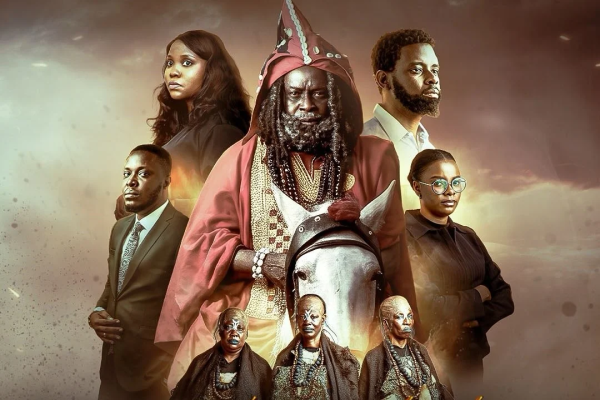
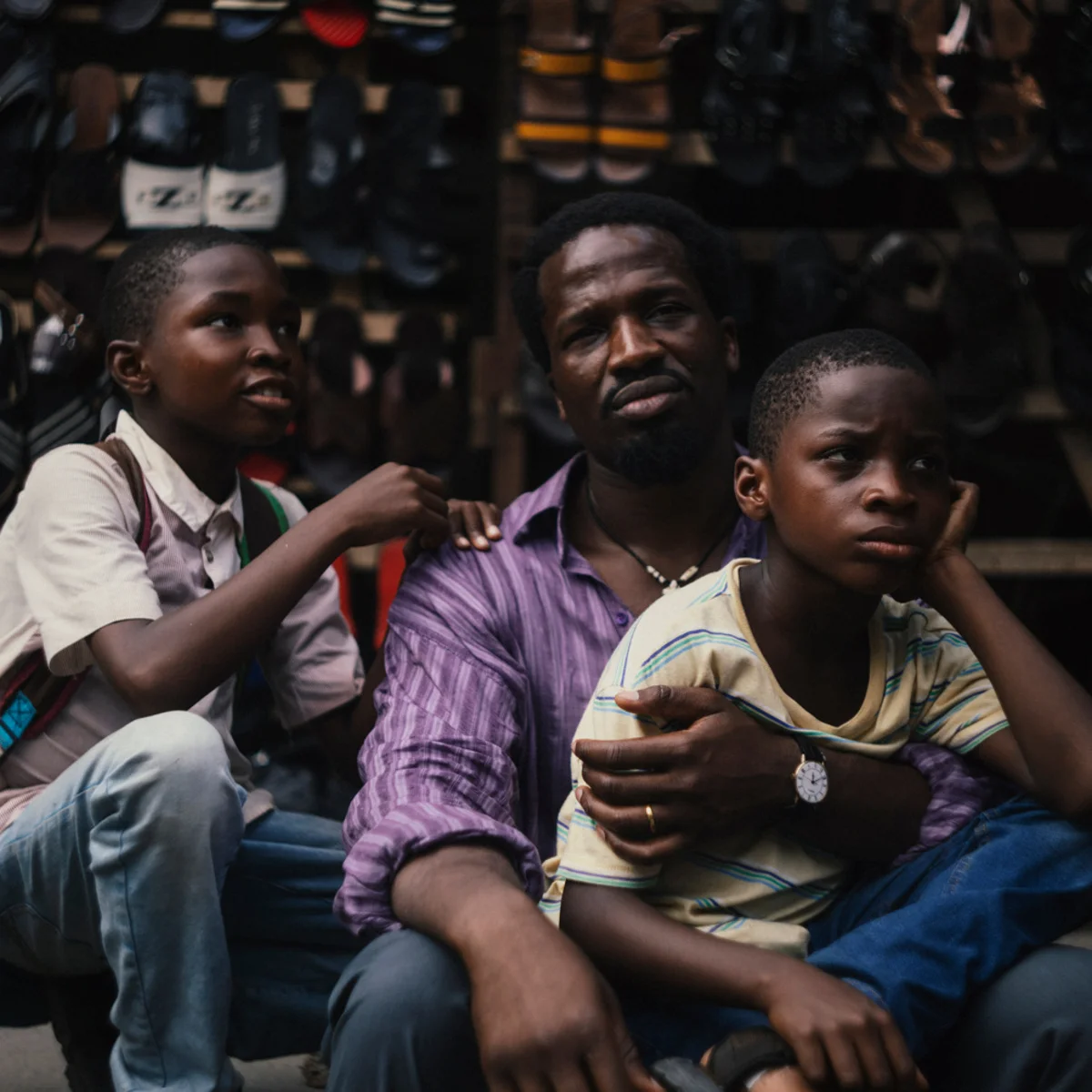

In May 2025, My Father’s Shadow made history. Directed by Akinola Davies Jr., it became the first Nigerian film ever selected for the Cannes Film Festival’s Official Selection. It screened in the prestigious Un Certain Regard section and won a Special Mention for the Caméra d’Or. Variety called it miraculous, and Rotten Tomatoes gave it a 98% critic score.
By the time it arrived in Nigerian cinemas in September 2025, its worldwide gross stood at around $1 million, less than its $3.4 million budget. That number tells you almost everything you need to know.
The wins are real, so what is going on?
This is not a case of a single exceptional film carrying the narrative; Nigerian cinema has been quietly building an international presence for years, and the recent run is remarkable by any measure you can think of.
In 2024, two Nigerian films screened at the Toronto International Film Festival: The Legend of the Vagabond Queen of Lagos, directed by the Agbajowo Collective, and Freedom Way by Afolabi Olalekan. That same year, The Weekend, a psychological thriller directed by Daniel Oriahi, premiered at the Tribeca Film Festival in New York. In 2023, CJ Obasi’s Mami Wata played Sundance and became Nigeria’s submission for the Academy Awards’ Best International Feature Film. This year, Lady, directed by Olive Nwosu, opened at the Berlinale, another British-Nigerian production earning serious international attention.
The film festivals are noticing something, but it makes one wonder if we, Nigerians, are.
The home crowd problem
There is a version of this story in which you would expect festival success to translate into domestic excitement for us. If a Nigerian film wins at Cannes, should Nigerians not pack the cinemas out of national pride alone? But that is not what has happened with any of these films.
Part of the reason is structural, as several of these films were simply not available to Nigerian audiences when they were gaining international acclaim. My Father’s Shadow was funded by BBC Film and the British Film Institute (BFI), distributed globally by MUBI, and premiered at Cannes six months before it ever reached a Nigerian screen. The film was, by design, built for international infrastructure first, even if it was Nigerian-themed from start to finish.
By the time Nigerian cinemas got the films, the moment had passed for the average viewer, but that structural problem is only half the story. The other half is cultural, and it is a harder conversation to have.
What we actually reward at the box office
We can all agree that Nigerian cinema has a strong commercial language that is not suitable for quiet, contemplative festival films. When Funke Akindele’s Behind the Scenes hit cinemas, it crossed ₦2.7 billion; ticket demand was so high that cinemas extended screenings. Nigerians came out in large numbers and with a lot of enthusiasm.
The people watching these films are often the same audience that is making thoughtful choices. A 1993 film, shot on 16mm, with a slow, reflective pace, asks viewers to be patient and really commit to watching it. My Father’s Shadow is an excellent film, but it requires a bit more from its viewers. On the other hand, high-energy Nollywood films provide a different kind of entertainment, which is a different style rather than a flaw.
The problem arises when we use box office performance to make broader judgements about quality, and when the films that represent us internationally remain invisible to most of the people they are supposedly representing.
The gap in our infrastructure
A notable detail in the My Father’s Shadow story is that the film relied on support from BBC Film and the BFI. It’s not because the story isn’t authentically Nigerian—it’s very much rooted in Nigerian culture—but because Nigerian financing structures haven’t yet fully embraced the kind of filmmaking that wins recognition at international festivals.
Films that make it to Cannes or Sundance usually have supportive investors who are happy to fund slower, more creative projects, unconventional formats, and stories that aren’t just aimed at quick box office success. Unfortunately, finding such funding at home is quite rare. As a result, filmmakers wanting to create these kinds of films often have to look for international co-production partners, or they might choose not to make those films at all.
The government refuses to offer meaningful help during the awards campaigns, which are crucial for shining a spotlight on these films. For instance, Mami Wata, Nigeria’s own Oscars entry, didn’t receive much support during its campaign. This was a missed chance to turn a Sundance success into a worldwide celebration for Nigerian cinema.
Do we have two versions of Nigerian cinema?
The honest answer to why Nigerian festival films are not taken seriously at home is that we have not yet decided what we want Nigerian cinema to be.
There is a vibrant version of Nollywood that is proudly commercial, incredibly prolific, and uniquely rooted in culture in ways that no Hollywood film could easily replicate. It’s a version that is truly loved both on the continent and in the diaspora. This isn’t a broken system; it’s one that’s thriving and working well for the Nigerian filmmakers.
There’s another version that’s quieter and more formally ambitious, supported through complex international means, and it’s starting to gain a different kind of recognition worldwide. However, this version still needs strong domestic infrastructure, audience growth, and institutional support, which aren’t quite in place yet.
These two versions of Nigerian cinema are not enemies. The Weekend played Tribeca and later landed a deal with HBO Max. Freedom Way screened at TIFF before opening in Nigerian cinemas. The pipeline can work in both directions. But for it to work, the conversation at home needs to catch up to what is happening abroad.
Nigerian filmmakers are telling stories that the world wants to see. Cannes has confirmed it, Sundance has confirmed it, and the Berlinale has confirmed it.