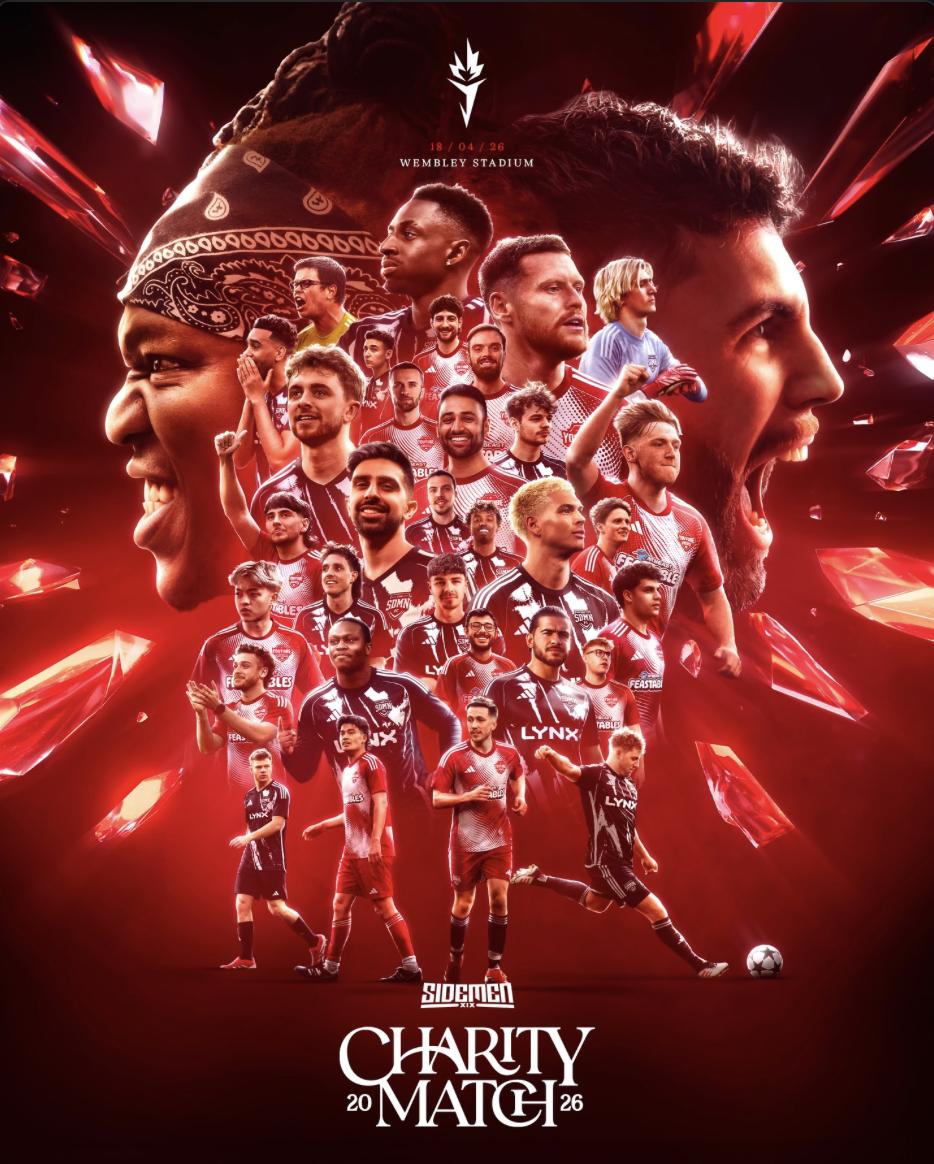


When William Troost-Ekong walked out at Mobolaji Johnson Arena last June, he brought Victor Osimhen, Victor Boniface, Anthony Joshua, AY Makun, Broda Shaggi, Odumodublvck, Zlatan Ibile, and Governor Sanwo-Olu with him. The Play For Purpose match and its follow-up gala at Radisson Blu raised roughly ₦60 million, with ₦47 million coming from auction bids on a Declan Rice jersey and an Anthony Joshua sparring glove, per The Punch. Four days ago at Wembley, the Sidemen’s seventh charity match raised £6.2 million in one afternoon. Same sport and format, two hundred times the money.
The temptation is to blame the stars. Somebody has to be less famous or less willing to show up. None of that holds. Osimhen is a global name. Anthony Joshua has headlined pay-per-view events from London to Jeddah. Broda Shaggi is one of the country’s most-followed comedians. They showed up on a Sunday in Lagos for a foundation running on a two-year-old mission.
Look at the architecture instead. That’s where the gap actually lives.
The Sidemen operate as a media company first and athletes second. The group started as a YouTube gaming collective in 2013, folded in a management company called Upload Agency, launched food and vodka brands, and turned the annual match into the finale of a year-round content cycle. The first match at St Mary’s Stadium in 2016 raised £110,000. The 2026 edition raised fifty-six times that. The event compounds because the media operation around it compounds. The Troost-Ekong Foundation launched in June 2024. A decade is a decade.
Donation rails are the second problem, and possibly the heavier one. Bright Side and JustGiving let a Londoner put £2 or £200 through with Gift Aid stacking another 25% on top and audited public accounts explaining where every pound went. The Nigerian equivalent doesn’t exist at scale. Trust is the binding constraint. Readers of this site watched the Blessing CEO cancer donation saga play out in April, with receipts flying on Instagram over who transferred what and whether the surgery ever happened. Each of those stories raises the cost of raising a naira for every legitimate foundation that comes after.
Then the currency math. Wembley sold out in three hours for the 2025 match, ninety thousand seats priced between £15 and £35. That alone grosses roughly £2 million in ticket revenue before any sponsorship, merch, or donation. At ₦20,000 a ticket in Lagos, matching it would need more than 100,000 Nigerians each paying roughly a month of minimum wage for a friendly. The naira doesn’t scale to those numbers, and neither does the median individual donation. A million Nigerians giving ₦1,000 each produces about £500,000 at today’s rate. Sidemen’s audience includes UK, EU, and US donors whose currencies simply carry more weight. That single fact reshapes the entire Nigerian event design, which is why the money moves through gala auctions to wealthy individuals instead of micro-donations from a livestream.
The most interesting piece is the creator-versus-celebrity distinction. Osimhen and Boniface rent attention through clubs and broadcasters. They appear for a day and leave. A creator like Kai Cenat owns the pipe to his audience and can route that audience toward a ticket or a donation button on command. Nigeria has creators with the reach. Mark Angel carries nine million YouTube subscribers. Taaooma, Maraji, Korty, Layi Wasabi and Broda Shaggi all move audiences. None has yet built a recurring tentpole property the way the Sidemen did, because the Nigerian creator economy still pays out in per-video ad share and brand deals rather than owned IP sold as a ticketed spectacle with a diaspora revenue line.
The Lagos charity match as it exists now will keep raising ₦50-60 million a year and doing real good for Akwa Ibom schools. That work matters. A Nigerian version built as the finale of a three-year content arc by creators who own their audience and price tickets in dollars to the diaspora is a different product altogether. Nobody has built that yet. The answer to why Nigerian charity football hasn’t scaled like Sidemen FC lives in whether a group of creators is willing to spend three years building the media property before the first ball gets kicked.